

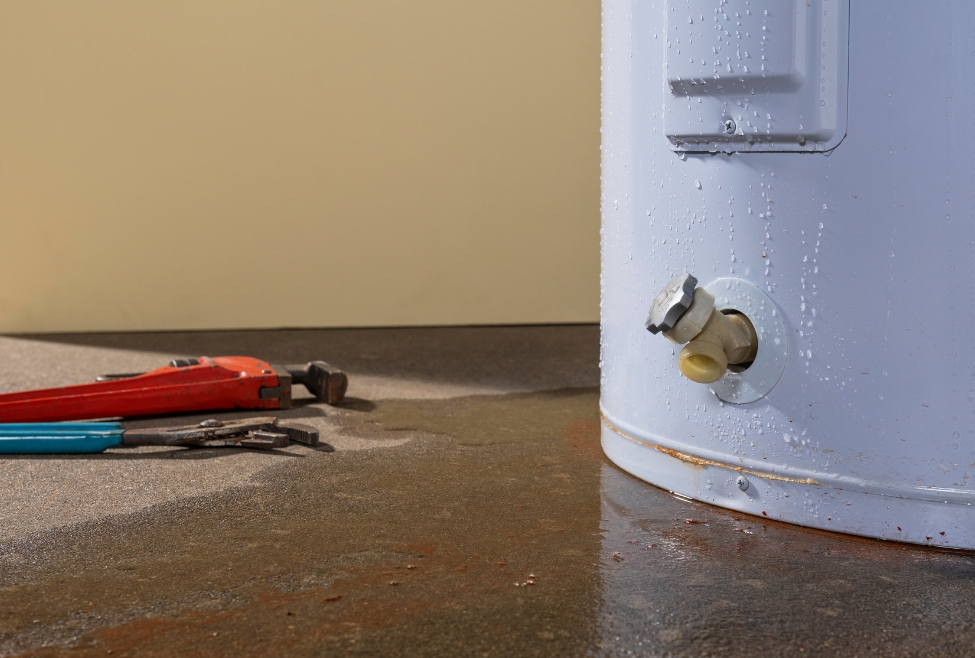
Why a Leaking Water Heater Should Never Be Ignored
A leaking water heater is one of the most common plumbing problems homeowners notice, and it can quickly lead to water damage, mold growth, and higher utility bills if it is left unresolved. Even a small puddle near the base of the tank can point to a larger issue inside the system. In some cases, the fix may be simple, while in others, a leaking water heater can be an early warning sign that the unit is nearing the end of its lifespan.
At Family Heating, Cooling, Electric and Plumbing, we often help homeowners understand whether a leak can be repaired or if the water heater should be replaced before a major failure occurs.
Common Causes of a Leaking Water Heater
Loose Drain Valve
The drain valve near the bottom of the tank can loosen over time. When that happens, water may slowly drip from the valve and collect around the base.
Signs include:
- Small puddle near the tank
- Moisture around the lower valve
- Leak that appears only after heavy use
In some cases, tightening or replacing the valve can stop the leak.
Pressure Relief Valve Problems
The temperature and pressure relief valve is designed to release excess pressure. If pressure builds inside the tank, the valve may begin leaking.
This can happen because of:
- High water pressure
- Overheating
- Faulty thermostat
- Sediment buildup
If pressure continues rising, professional water heater repair may be necessary.
Corrosion Inside the Tank
Older systems often develop internal rust. Once the tank itself corrodes, water can begin leaking through the metal shell.
Common warning signs:
- Rusty or discolored hot water
- Water around the base
- Rumbling sounds
- Reduced hot water supply
When the tank itself is leaking, water heater replacement is often the safest solution.
Loose Plumbing Connections
Sometimes a leaking water heater issue is not the tank at all. Water may come from loose pipe fittings above the unit.
This can cause:
- Dripping from top of heater
- Moisture on nearby pipes
- Water pooling around the tank
A professional plumbing inspection can confirm the source.
What to Do If Your Water Heater Is Leaking
If you notice a leak, taking quick action can reduce damage.
1. Turn Off the Power
For electric units, switch off the breaker.
For gas units, turn the gas valve to the off position.
2. Shut Off the Water Supply
Close the cold water shutoff valve above the heater.
3. Check the Leak Location
Look for:
- Top connections
- Pressure valve
- Drain valve
- Bottom of the tank
The leak location often reveals the cause.
4. Clean Up Standing Water
Dry the area immediately to prevent flooring damage and mold.
When a Leaking Water Heater Means Replacement Is Needed
A leaking water heater often can be repaired when the issue is external. However, replacement may be necessary if:
- The tank itself is cracked
- Corrosion is severe
- The system is over 10–12 years old
- Leaks continue after repairs
- Hot water is inconsistent
In these situations, continuing repairs may cost more than installing a newer system.
How to Prevent Future Water Heater Leaks
Routine maintenance can help prevent future leaks.
Helpful prevention includes:
- Annual tank flushing
- Checking the pressure valve
- Replacing the anode rod
- Inspecting fittings regularly
- Scheduling water heater maintenance
Small issues caught early often prevent larger repairs later.
Get Help Before a Small Leak Becomes a Major Problem
Family Heating, Cooling, Electric and Plumbing proudly assists homeowners in New Bedford, Fall River, Taunton, Dartmouth, Somerset, and Fairhaven, MA. Our team provides plumbing repair, water heater service, electrical troubleshooting, and full home comfort solutions.
A leaking water heater may seem minor at first, but even a slow drip can lead to expensive damage over time. Family Heating, Cooling, Electric and Plumbing can identify the cause, explain your options, and restore safe, reliable hot water before the problem gets worse. Contact our team today to schedule service.
FAQs
What should I do if my water heater is leaking?
If you notice a leaking water heater, the first step is to turn off the power to the unit. For an electric water heater, switch off the breaker. For a gas water heater, turn the gas control valve to the off position. Next, shut off the cold water supply valve above the tank to stop additional water from entering the system. After that, inspect whether the leak is coming from a loose valve, pipe connection, or the bottom of the tank. Cleaning up standing water quickly can help prevent floor damage, mold growth, and moisture issues while the problem is being diagnosed.
How long will a water heater last once it starts leaking?
Once a water heater starts leaking, the remaining lifespan can vary from a few days to several months depending on the source of the leak. A loose fitting or faulty pressure relief valve may allow the unit to continue working after a repair. However, if the tank itself is leaking because of internal corrosion, failure can happen unexpectedly. In many cases, a leaking tank means the system is already near the end of its usable life and replacement should be planned soon to avoid a sudden rupture.
Can I still use water if the water heater is leaking?
You may still have running water in the home when a leaking water heater issue develops, but continuing to use hot water can worsen the problem. Every time the unit heats more water, pressure changes inside the tank can make the leak grow larger. If the leak is minor and from an external connection, short-term use may be possible. If the leak is from the bottom of the tank, it is usually safer to stop using the system until the cause is inspected to prevent flooding or electrical hazards.
Why would a water heater leak from underneath?
A water heater leaking from underneath often points to internal tank corrosion or a failing drain valve. Sediment buildup can cause the bottom of the tank to overheat and weaken the metal over time. As the tank lining breaks down, water begins escaping from the base. In other cases, condensation or a slow leak from above can run down the tank and collect underneath, making it appear the bottom is leaking. Determining the exact source usually requires a full water heater inspection.
Is it an emergency if my water heater is leaking?
A leaking water heater can become an emergency depending on how severe the leak is. A small drip may only require prompt repair, but a larger leak can quickly damage flooring, walls, and nearby electrical components. If water is actively pooling, the tank is making unusual noises, or the leak suddenly worsens, it should be treated as an urgent plumbing issue. In severe cases, shutting off the system immediately can help prevent a major water damage situation.
Need Help With a Leaking Water Heater?
If your leaking water heater is getting worse or you are unsure whether repair or replacement is the better option, Family Heating, Cooling, Electric and Plumbing can inspect the system and help restore safe, reliable hot water in your home.