
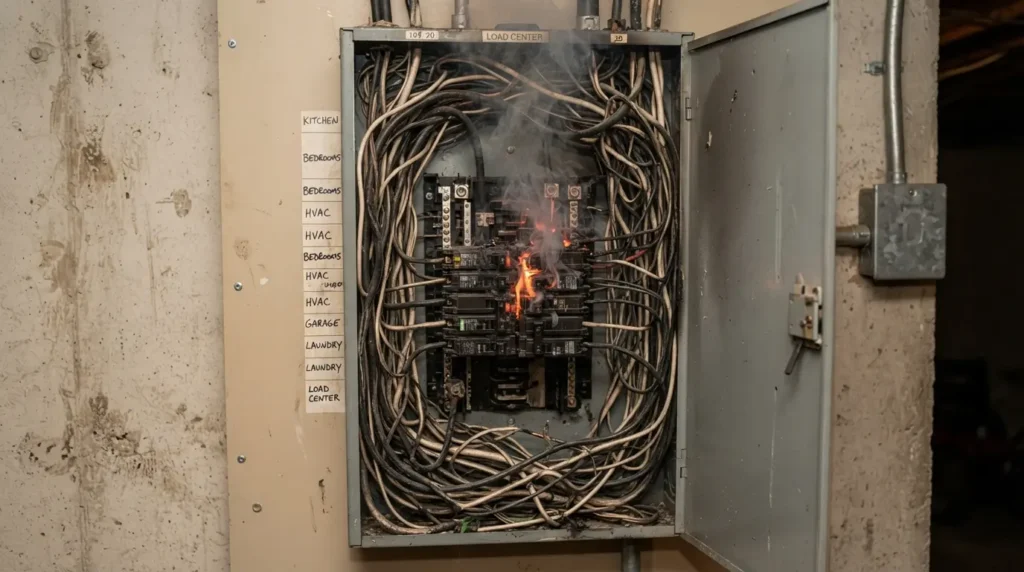
An electrical panel is the beating heart of your home’s electrical system, routing power through a network of wires to run everything from your refrigerator to your smartphone charger. However, as modern families integrate high-demand appliances, electric vehicle (EV) chargers, and advanced HVAC systems, older infrastructure struggles to keep pace. When your system is pushed beyond its limits, you may notice critical signs your electrical panel overloaded and unsafe, presenting severe fire risks and operational hazards that require immediate professional attention. Identifying these indicators early is essential to maintaining a safe, functional home.
At Family Heating, Cooling, Electric & Plumbing, we believe that understanding your home’s electrical capacity is a vital step toward protecting your family and your property. When an electrical panel is consistently pushed to its maximum capacity, it doesn’t just cause inconvenient power interruptions; it begins to degrade structurally. This degradation creates serious hazards hidden behind your walls. Let us explore the mechanics of electrical overloading, the distinct warning signs of an unsafe system, the dangers of outdated equipment, and why modernizing your panel is one of the smartest investments you can make for your home.
What Does It Mean When an Electrical Panel Is Overloaded?
To understand why an overloaded electrical system is dangerous, it helps to understand how a service panel functions. Your home is supplied with a specific amount of electrical current from your utility company, measured in amperes (amps). Standard older homes often operate on 60-amp or 100-amp service, while modern homes typically require 200-amp or even 400-amp service to safely support contemporary electrical loads.
This electrical supply enters the main service panel, where it is divided into individual branch circuits. Each circuit is protected by a safety device called a circuit breaker. The breaker is designed to trip and cut off the flow of electricity if the current flowing through the wire exceeds its safe rating.
An overload occurs when the total demand from the appliances and devices plugged into a circuit—or across the entire panel—exceeds the maximum amperage the system can safely handle. When this happens continuously, the electrical panel becomes overloaded, and the built-in safety mechanisms begin to fail. Instead of cleanly cutting the power, worn-out breakers or overtaxed systems can generate extreme heat, melting wire insulation and paving the way for electrical arcing and devastating house fires.
Warning Signs of an Overloaded and Unsafe Electrical Panel
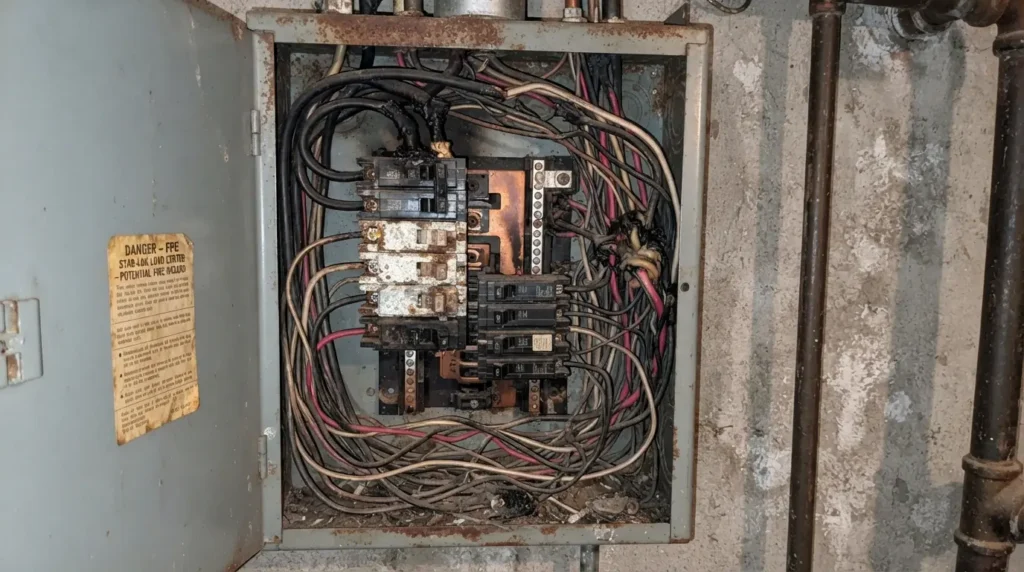
While some electrical issues are hidden from plain sight, your home will usually provide several warning signs that its power distribution center is struggling. Ignoring these signs can lead to costly appliance damage or catastrophic system failures.
1. Frequent and Recurring Circuit Breaker Trips
Circuit breakers are designed to trip occasionally as a safety measure. However, if you find yourself constantly walking to the basement or garage to reset a breaker, this is a clear indication of a chronic overload. When a breaker trips repeatedly, it is telling you that the demand placed on that circuit is higher than its safety threshold. Over time, the breaker itself can weaken from repeated tripping, eventually failing to trip at all, which allows dangerous levels of heat to build up along the electrical line.
To learn step-by-step instructions on dealing with these issues safely, you can read our guide on how to reset a circuit breaker.
2. Flickering, Dimming, or Blinking Lights
Have you noticed your lights momentarily dimming when your air conditioner cycles on, or when you use a high-wattage appliance like a microwave or hair dryer? This occurs because the sudden draw of electricity from a large appliance temporarily starves other devices on the circuit of the voltage they need. Frequent voltage fluctuations are a classic indicator that your electrical panel does not have the capacity to support your home’s concurrent energy needs.
3. Sizzling, Buzzing, or Crackling Noises
A healthy electrical panel should operate in near-total silence. If you stand near your service panel and hear a faint buzzing, sizzling, or crackling sound, you are likely hearing the physical sound of electrical arcing. Arcing happens when electrical current leaps across gaps between loose connections or damaged wires. This is an extreme safety hazard that can quickly ignite surrounding combustible materials.
If you are experiencing these alarming noises, it is crucial to recognize the warning signs before an electrical fire breaks out so you can act immediately.
4. Warm Service Panels, Outlets, or Switches
Electricity naturally generates some heat, but your electrical panel, outlets, and wall switches should always feel cool to the touch. If you feel warmth radiating from your panel door, or if any outlets feel hot, it is a sign that the wiring is carrying more current than it was designed to handle. This excessive heat can degrade the plastic casings of your outlets and the protective sheath of your household wiring.
5. Burning Smells and Scorch Marks
Perhaps the most urgent warning sign of all is a distinctive, acrid odor resembling burning plastic or fish near your panel or outlets. This smell indicates that electrical insulation is actively melting due to extreme heat. You may also notice dark discoloration, soot, or minor scorch marks on the panel door, circuit breakers, or wall receptacles. If you observe these symptoms, turn off your main power supply immediately and contact a licensed electrician.
6. Outlets That Spark or Fail to Work
When you plug an appliance into an outlet and see a prominent spark, or if certain outlets in your home suddenly stop working altogether, it is a sign of compromised electrical integrity. Broken connections within the panel can cause localized failures throughout your home, indicating that the system’s internal hardware is degrading under heavy load.
If you are currently experiencing this issue, we invite you to review our breakdown of what causes electrical outlets to stop working to diagnose the root problem.
Hidden Hazards: Outdated Electrical Panels
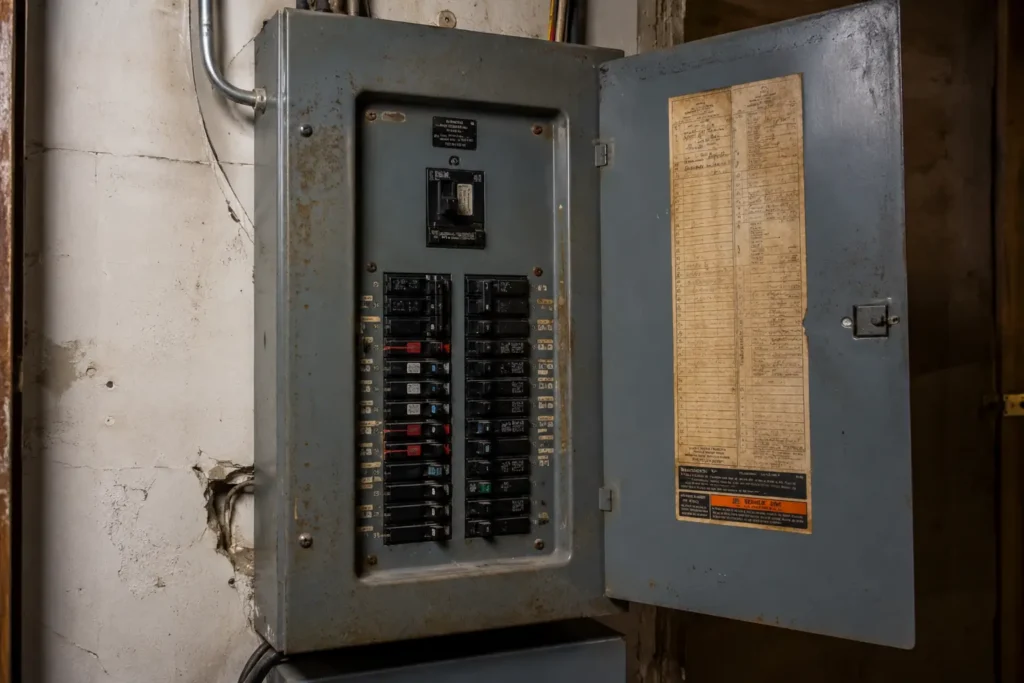
Many homes built between the 1950s and 1980s are equipped with electrical panels that are not only overloaded by today’s standards but are also inherently unsafe due to manufacturing defects or obsolete technology. If your home features any of the following systems, replacing your panel is an urgent modernization priority to safeguard your property:
Federal Pacific Electric (FPE) Stab-Lok Panels
Federal Pacific Electric panels were installed in millions of homes for decades. However, subsequent testing revealed that FPE Stab-Lok breakers have an incredibly high rate of failure. In many cases, these breakers fail to trip when overloaded, allowing dangerous current levels to overheat the wiring and cause fires. Many insurance companies will not cover homes that still have an FPE panel installed.
Zinsco Panels
Commonly installed throughout the 1970s, Zinsco panels have a design flaw where the circuit breakers can melt directly to the main bus bar. Once melted, the breaker cannot trip, meaning there is no safety cutoff to stop an electrical overload.
Outdated Fuse Boxes
Before circuit breakers became the standard, homes used fuse boxes. While fuses are highly effective at cutting power when they blow, older fuse boxes were designed for an era when household electrical demands were minimal. To cope with modern appliances, some homeowners mistakenly install larger fuses than the wiring can handle (a dangerous practice known as “over-fusing”), which forces the wires to overheat and creates a severe fire risk.
If your home still relies on old panels, it is vital to learn how often should you rewire your house to keep your household safe.
Why Modern Life Demands a Panel Upgrade
The way we live today looks vastly different from how we lived twenty, thirty, or forty years ago. Modern technological advancements have dramatically increased our reliance on the electrical grid, making older service panels obsolete. Several major upgrades heavily tax your electrical system, requiring a high-capacity panel:
- High-Efficiency HVAC Systems: Modern heat pumps, central air conditioners, and whole-house filtration systems require dedicated, high-voltage circuits to operate efficiently. Installing these units on an outdated panel can lead to frequent system shutdowns and mechanical strain.
- Electric Vehicle (EV) Chargers: A Level 2 EV charging station typically requires a dedicated 40-amp to 60-amp circuit. For a home with an old 100-amp panel, adding an EV charger is practically impossible without overloading the entire system.
- Kitchen Remodels and High-End Appliances: Induction cooktops, double wall ovens, commercial-grade refrigerators, and high-speed dishwashers demand significant power. Upgrading your kitchen almost always requires dedicated circuits and additional panel space.
- Smart Home Automation and Luxury Additions: Tankless water heaters, hot tubs, home theaters, and elaborate landscape lighting systems add severe cumulative loads that old panels cannot safely support.
The Benefits of Upgrading to a 200-Amp or 400-Amp Panel
Upgrading your home’s electrical service panel is a significant investment, but the returns in safety, convenience, and home value are unmatched. When you hire a licensed professional from Family Heating, Cooling, Electric & Plumbing to perform a panel upgrade, you unlock several long-term benefits:
1. Uncompromising Fire Protection and Safety
The primary reason to upgrade an overloaded electrical panel is safety. Modern panels feature advanced engineering, high-quality circuit breakers, and provisions for Arc Fault Circuit Interrupters (AFCIs) and Ground Fault Circuit Interrupters (GFCIs). These technologies detect microscopic electrical leaks and immediately shut down power before a spark can grow into a devastating house fire.
2. Reliable, Interruption-Free Power
Say goodbye to the frustration of losing power in your kitchen because someone turned on a space heater or a hair dryer in the bedroom. A panel with adequate amperage and plenty of circuit spaces ensures that your appliances have the dedicated power lines they need to run smoothly without tripping breakers.
3. Long-Term Infrastructure for Future Home Projects
Whether you plan to build an addition, finish your basement, install a home standby generator, or buy an electric car, a modern 200-amp or 400-amp panel provides the essential electrical foundation you need. You won’t have to worry about whether your electrical system can handle your next exciting home improvement project.
4. Increased Property Value and Insurance Compliance
Home inspectors and buyers look closely at electrical systems. An outdated, overloaded panel can derail a home sale or make it incredibly difficult to secure affordable homeowners insurance. Investing in a professional panel upgrade modernizes your property, making it highly attractive to prospective buyers and fully compliant with current National Electrical Code (NEC) standards.
5. Protection for Expensive Electronics and Appliances
Modern appliances and sensitive electronic devices contain delicate microprocessors that can easily be ruined by minor voltage drops, surges, and inconsistent power delivery caused by an overloaded panel. Clean, stable electrical distribution extends the lifespan of your valuable household investments.
What to Expect During a Professional Electrical Panel Upgrade
Replacing an electrical panel is not a do-it-yourself project. It is a highly technical, dangerous task that involves handling live utility wires carrying thousands of watts of electricity. Working with licensed electricians ensures that the job is executed perfectly, safely, and in full compliance with local municipal building codes.
To learn more about what variables affect your installation costs, check out our guide on how much a full electrical panel costs.
Here is what the professional installation process typically looks like:
- Load Calculation and Assessment: Our technicians will carefully audit your home’s square footage, heating and cooling systems, major appliances, and power habits to calculate your exact electrical load requirements. This ensures your new panel is perfectly sized for your lifestyle.
- Permitting and Coordination: We handle all necessary municipal permits and coordinate directly with your local power utility company to schedule the temporary power disconnect and reconnect.
- Removal of Old Infrastructure: Once power is safely shut down, we carefully disconnect the old panel, remove worn-out breakers, and inspect the incoming service lines for damage.
- Installation of the New Panel: We install a modern, high-quality circuit breaker panel, run new ground wires, install code-compliant breakers, and neatly organize the interior wiring to prevent overlapping or overheating.
- Labeling and Testing: We systematically test each individual circuit for proper voltage and ground integrity. Finally, we provide clear, legible labels on your panel door so you always know exactly which breaker controls which area of your home.
- Final Inspections: A local electrical inspector will review our work to verify that everything meets safety codes, ensuring total peace of mind for you and your family.
Secure Your Home with Family Heating, Cooling, Electric & Plumbing
Your family’s safety should never be left to chance, especially when it comes to the complex electrical systems hidden within your walls. If you have noticed any of the warning signs of an overloaded system, or if your home still relies on an outdated electrical panel, now is the time to act before a minor inconvenience turns into a dangerous hazard.
At Family Heating, Cooling, Electric & Plumbing, our team of highly trained, licensed, and insured electricians is dedicated to providing the highest standard of craftsmanship, transparent pricing, and unmatched customer service. We are here to inspect your system, answer your questions, and deliver safe, modern solutions that keep your home running smoothly for decades to come.
Contact Family Heating, Cooling, Electric & Plumbing today to schedule a comprehensive electrical safety inspection or discuss your panel modernization options. Let us help you protect your home, power your life, and bring lasting peace of mind to your household.