

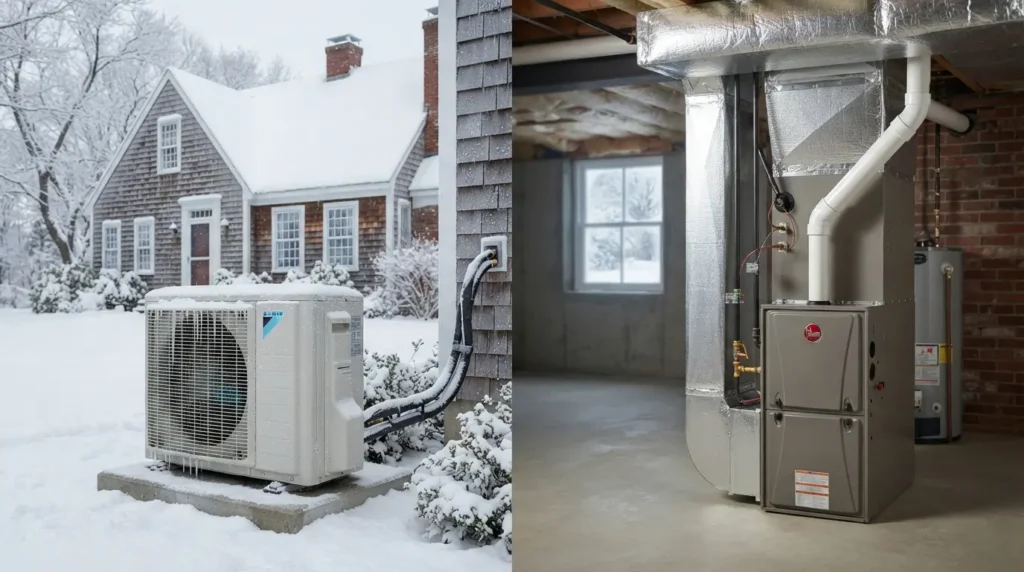
When the autumn leaves finish falling and the brisk Atlantic winds begin sweeping across the South Coast of Massachusetts, homeowners inevitably turn their attention to the basement thermostat. Heating a home in New England is not merely a matter of comfort; it is a major annual expense that requires careful operational planning. If your existing heating system is nearing the end of its operational lifespan, you are likely exploring modern infrastructure upgrades to keep your property safe and efficient. Weighing the options of a heat pump vs traditional furnace is one of the most critical decisions you will make for your property this season, as both systems handle the demanding Massachusetts sub-zero winter temperatures in fundamentally different ways.
For decades, the standard choice for local properties was straightforward: you installed a centralized fossil-fuel system and paired it with an independent air conditioning unit for the humid summer months. However, rapid advancements in cold-climate engineering and shifting regional energy regulations have fundamentally disrupted this traditional approach. Navigating these technical choices can feel overwhelming when you are simply trying to determine what keeps your living space warm without inflating your monthly utility invoices. This detailed engineering and operational guide will break down how each system functions in freezing weather, analyze long-term cost structures, and help you evaluate the ideal setup for your unique home layout.
Understanding the Core Mechanical Differences
To make an informed decision for your household, you must first understand that these two systems rely on entirely different thermodynamic concepts to achieve the same result. A traditional furnace is a heating generator, whereas a heat pump is an advanced energy mover.
How Traditional Furnaces Generate Heat
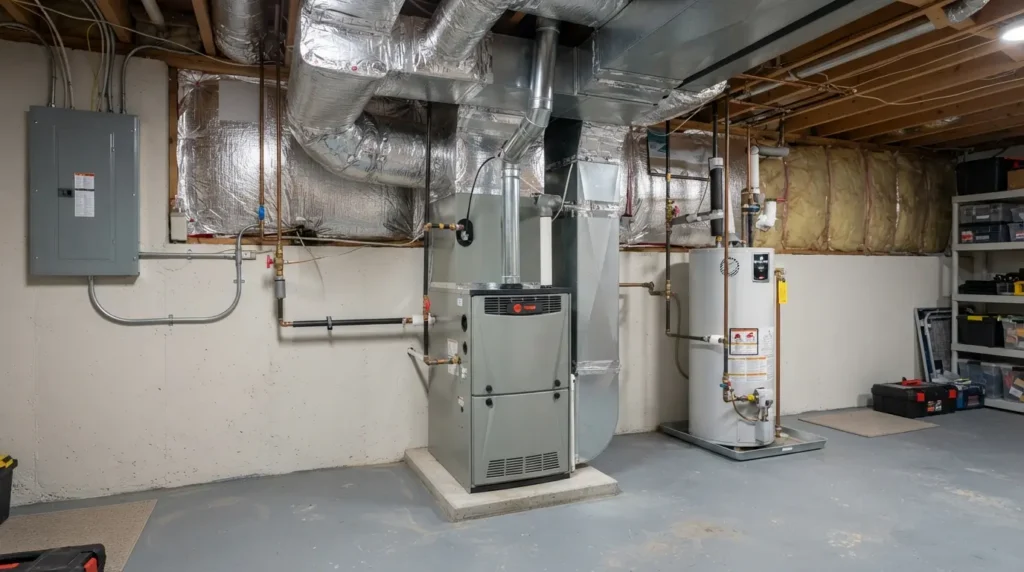
Traditional furnaces rely on thermal combustion to generate heat. Whether your specific system utilizes natural gas, heating oil, or liquid propane, the internal operational process remains identical. When your indoor thermostat registers a temperature drop, it signals the furnace to open a fuel valve and ignite the main burners.
These burning gases heat a heavy metal component known as a heat exchanger. As the metal surfaces reach high temperatures, your system’s centralized blower fan forces cold indoor return air across the exterior of the heat exchanger. This process warms the air significantly before pushing it through your supply ductwork to heat individual rooms. The toxic combustion byproducts are safely vented outside through a dedicated flue pipe or chimney line.
How Heat Pumps Move Heat
In contrast to combustion systems, a heat pump utilizes advanced refrigeration chemistry to transfer existing thermal energy from one location to another. Even when the outdoor air feels incredibly freezing to human skin, ambient thermal energy remains present in the atmosphere.
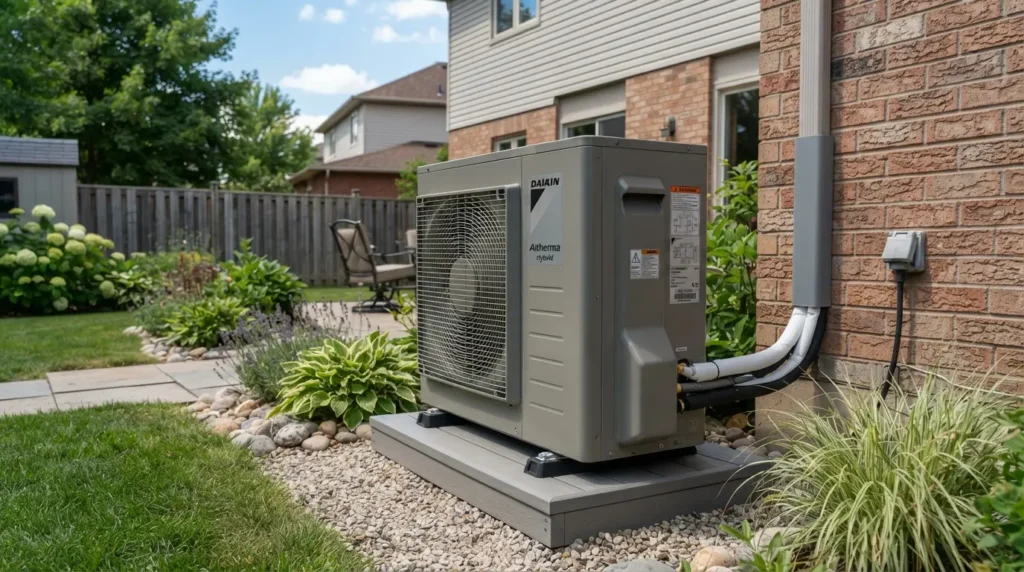
During the winter cycle, an outdoor unit utilizes a compressor to circulate a specialized chemical refrigerant through a series of condensing coils. This cold liquid refrigerant absorbs ambient outdoor heat, causing the chemical to evaporate into a low-temperature gas. The compressor then compresses this gas, raising its pressure and temperature exponentially. The superheated gas travels indoors to an air handler, where a fan blows air across the internal coils, releasing that trapped heat directly into your home before the refrigerant condenses back into a liquid to repeat the cycle.
The Cold-Weather Performance Evaluation
The primary concern for any homeowner in Bristol County or the surrounding South Coast areas is reliability during extreme weather events. When a major nor’easter rolls through New England, dropping temperatures into the single digits, your heating system must have the mechanical capacity to keep up.
Furnace Performance in Deep Freezes
From a purely thermodynamic perspective, traditional furnaces are completely unaffected by outdoor ambient temperatures. Because they create their own intense heat source via localized combustion, a gas or oil furnace will discharge air into your home at a consistent 110°F to 120°F, regardless of whether it is 45°F or -5°F outside.
This high-heat output provides that distinct, rapid burst of warm air that many long-time New England residents are accustomed to experiencing. If your home has poor structural insulation or older single-pane windows, the raw heating power of a combustion furnace can easily overcome building envelope deficiencies to maintain your desired indoor temperature.
Heat Pump Performance in Deep Freezes
Historically, older generations of heat pumps suffered significant efficiency drops when ambient outdoor temperatures dipped below 32°F. When the atmosphere grew too cold, the system struggled to extract enough thermal energy, forcing it to rely on expensive, inefficient electric resistance backup heat strips to close the gap.
Fortunately, modern hyper-heating or “cold-climate” heat pumps are engineered with variable-speed inverter compressors that solve this problem. These advanced units can maintain 100% heating capacity down to 5°F, and continue to operate efficiently at temperatures as low as -15°F. However, because they deliver air at a milder, more consistent 85°F to 90°F, the airflow may feel less intense than a traditional furnace, even though it perfectly maintains your target room temperature over a slightly longer operational cycle.
Efficiency Ratings and Environmental Factors
When evaluating a heat pump vs traditional furnace, understanding how efficiency is measured will directly influence your long-term operational budget.
Deciphering Furnace AFUE Ratings
Furnace efficiency is represented by a percentage known as the Annual Fuel Utilization Efficiency (AFUE) rating. If you purchase a mid-efficiency gas furnace with an 80% AFUE rating, it means that 80% of the energy in the fuel is converted into usable indoor heat, while 20% escapes out the ventilation flue.
Premium, high-efficiency condensing furnaces can achieve up to 96% to 98% AFUE. While this is an exceptional engineering achievement for combustion technology, it fundamentally means that you can never get more energy out of the system than the exact amount of fuel you consume.
Deciphering Heat Pump COP Ratings
Heat pump efficiency is measured by its Coefficient of Performance (COP), which calculates the ratio of heating energy delivered relative to the electrical energy consumed. Because these systems are moving heat instead of creating it out of raw fuel, their efficiency numbers routinely break past the 100% barrier.
During a typical autumn or mild winter day in Massachusetts, a high-performance heat pump can operate at a COP of 3.0 to 4.0. This means that for every single kilowatt of electricity used to power the compressor and fans, the system delivers three to four kilowatts of equivalent thermal energy into your home. This equates to an effective efficiency rating of 300% to 400%, representing a massive reduction in raw energy usage compared to any combustion alternative.
Comparative Cost Architecture and ROI
Calculating the financial return on your investment requires looking beyond the initial equipment installation invoice. You must factor in monthly fuel costs, local utility rates, and available government clean-energy incentives.
Monthly Operating Costs in Massachusetts
Energy prices in Massachusetts are highly dynamic, with local electricity and natural gas rates sitting well above the national average. If your home currently utilizes an outdated heating oil or liquid propane furnace, transitioning to an electric heat pump will almost certainly reduce your monthly winter utility expenses.
Conversely, if your home has direct access to a municipal natural gas line, the operational cost comparison becomes tighter. Because natural gas remains a relatively cost-effective fuel source per BTU, a high-efficiency 96% AFUE gas furnace may offer comparable monthly running costs to an electric heat pump when outdoor temperatures drop into extreme sub-zero ranges.
Upfront Capital Costs and Regional Rebates
The initial capital required to install a complete, whole-home cold-climate heat pump system is typically higher than replacing a standard standalone furnace. However, the state of Massachusetts offers some of the most aggressive clean-energy financial incentives in the United States through the Mass Save® program.
Depending on your existing heating fuel type and income qualifications, you may eligible for substantial whole-home heat pump rebates, which can significantly offset the initial price gap. Additionally, federal tax credits under the Inflation Reduction Act can provide further financial relief. When you factor in the reality that a heat pump provides both whole-home heating and high-efficiency summer air conditioning within a single piece of equipment, the combined savings can deliver a compelling long-term return on investment.
Assessing Asset Lifespan and Operational Maintenance
Every mechanical system requires consistent upkeep to protect your investment and prevent unexpected mid-winter operational failures. The structural demands placed on these systems vary greatly due to their differing work cycles.
Lifespan Expectancies
A high-quality traditional furnace typically boasts an operational lifespan of 15 to 20 years. Because a furnace only runs during the late autumn and winter months, its internal mechanical components remain completely idle for nearly half of the calendar year, preserving the integrity of the burners, igniters, and heat exchangers.
Because a heat pump handles both your winter heating and your summer cooling demands, it operates year-round without an extended seasonal break. Consequently, the continuous mechanical wear and tear on the compressor and fan motors typically limits a heat pump’s dependable operational lifespan to roughly 12 to 15 years.
Required Preventative Maintenance
To ensure safe operation, a traditional furnace requires an annual safety inspection before the cold weather sets in. Technicians must meticulously inspect the heat exchanger for any microscopic structural cracks that could allow deadly carbon monoxide gas to leak into your home’s circulating air supply.
Because heat pumps run continuously across changing seasons, they generally require two professional maintenance visits per year: one in the spring to prep the system for heavy cooling loads, and one in the fall to verify optimal heating calibration. Furthermore, because a heat pump moves a higher volume of air to compensate for its lower supply temperatures, keeping air filters pristine is absolutely non-negotiable to prevent system strain.
Hybrid Dual-Fuel Systems: The Middle Ground
If you find yourself torn between the raw heating power of combustion and the unmatched efficiency of refrigeration technology, you do not necessarily have to choose one over the other. Many strategic homeowners opt for a hybrid dual-fuel configuration.
How a Hybrid System Functions
A hybrid system pairs an electric cold-climate heat pump with a high-efficiency gas or oil furnace inside a single, unified system. The configuration is governed by an intelligent, programmable thermostat that continuously monitors real-time outdoor temperatures.
During the mild autumn months and typical winter days when temperatures hover between 35°F and 50°F, the system relies exclusively on the ultra-efficient heat pump to keep your living spaces comfortable. However, when an extreme cold front moves through and temperatures plunge below freezing, the system automatically shuts down the heat pump and engages the traditional furnace. This clever cross-over strategy ensures your home always utilizes the most cost-effective and structurally reliable heating method available at that exact moment.
Property Layout Checklist: Which System Fits Your Home?
Before committing to a specific equipment path, you must thoroughly evaluate the existing architectural limitations and structural realities of your current property.
+-------------------------------------------------------------------------+
|                        HOME ARCHITECTURE LOGIC                          |
+-------------------------------------------------------------------------+
| IF YOUR PROPERTY HAS:              | THE LOGICAL HEATING DIRECTION IS:  |
+------------------------------------+------------------------------------+
| • Active Natural Gas Hookups       | High-Efficiency Condensing         |
| • Older, uninsulated framing       | Traditional Furnace                |
| • Existing functional ductwork     | (Or a Hybrid Setup)                |
+------------------------------------+------------------------------------+
| • Outdated Oil/Propane Infrastructure| High-Performance Cold-Climate    |
| • No existing ductwork channels     | Ductless Mini-Split Heat Pump     |
| • Desires for integrated Summer AC | System                             |
+------------------------------------+------------------------------------+
Evaluating Existing Ductwork Configuration
If your home already features a robust, well-insulated, and properly sized central ductwork network, upgrading to either a new furnace or a centrally ducted heat pump is a relatively seamless construction process.
However, many historic New England homes utilize older boiler systems with hydronic baseboards or cast-iron radiators, meaning they lack any internal air ducts. Building custom ductwork channels through plaster walls and historical framing can be incredibly disruptive and cost-prohibitive. In this specific scenario, a ductless mini-split heat pump system is often the ideal solution, as it allows you to mount sleek, independent air-handling units directly on your walls while connecting them to an outdoor compressor via small, non-invasive refrigerant lines.
Analyzing Insulation and the Building Envelope
Your home’s thermal retention capability plays a massive role in system selection. A traditional furnace can easily overcome drafts and poor insulation through sheer thermal output, though it will consume a high volume of fuel to do so.
If you intend to transition exclusively to a heat pump, it is highly recommended to perform a comprehensive energy audit first. Sealing structural air leaks in your attic, upgrading insulation profiles, and minimizing window drafts will allow a heat pump to maintain uniform indoor temperatures with maximum efficiency, preventing the system from overworking during sustained sub-zero periods.
Making Your Decision with Long-Term Confidence
Choosing between a heat pump vs traditional furnace is a personalized decision that depends entirely on your home’s unique layout, your long-term financial plans, and your comfort preferences. If you have access to affordable natural gas and want an asset that delivers maximum high-heat reliability with minimal structural adjustments, a traditional furnace remains a highly dependable option for New England properties.
On the other hand, if you are looking to break away from volatile heating oil or propane costs, want to add premium air conditioning to your home, and wish to take full advantage of lucrative state clean-energy rebates, a modern cold-climate heat pump represents the future of residential climate control.
Take your time reviewing your monthly utility records, evaluating your current equipment’s physical condition, and considering how long you plan to remain in your current home. When you are ready to transition from casual research to planning a tailored mechanical upgrade, contact a licensed, factory-certified specialist at Family Heating, Cooling, Electric & Plumbing to evaluate your property’s heating load and help design the perfect comfort system for your household.