
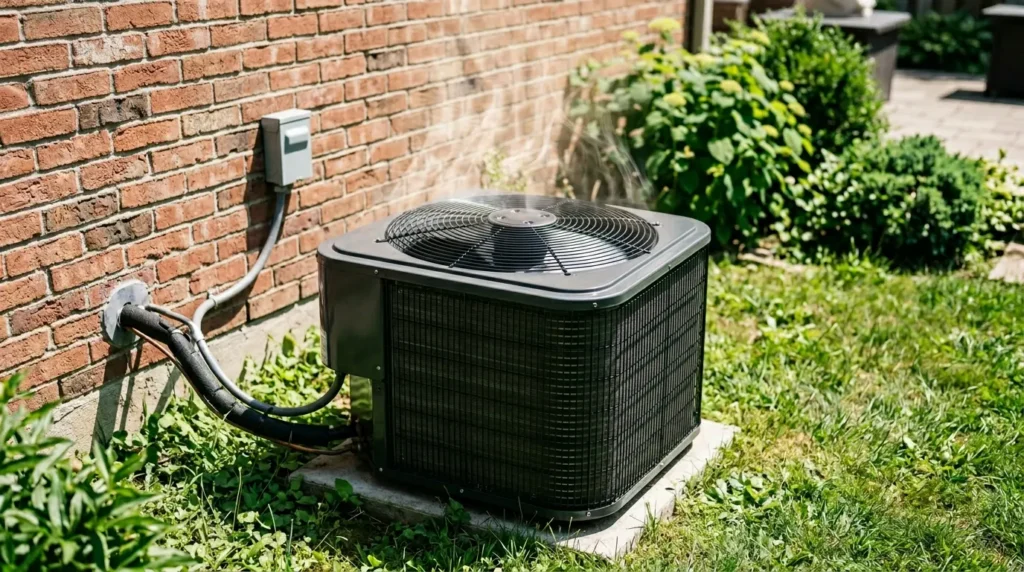
Imagine this: It is the hottest day of the summer. You are relaxing on the couch, but you notice a layer of sweat forming on your forehead. You check the thermostat. It is set to a crisp 71°F, but the indoor temperature reads a stifling 78°F. You walk over to the vents, hold up your hand, and your heart sinks.
Your AC is blowing warm air but running.
It is a frustrating, confusing situation. The outdoor unit is humming, the indoor fan is spinning, and air is actively pushing through your registers—but it feels more like a hair dryer than an air conditioner. Because the system hasn’t completely shut down, you might think it is just having a temporary glitch.
Before you panic and call an HVAC technician for an expensive emergency repair, take a deep breath. When you experience an AC blowing warm air but running, the root cause can range from a simple settings mistake you can fix in thirty seconds to a component failure that requires professional tools.
This comprehensive troubleshooting guide will walk you through the 5 most common reasons your air conditioner has turned into a heater, how to diagnose the issue yourself, and exactly when it is time to call in the pros.
The Immediate Checklist: Two Things to Check Right Now
Before diving into the mechanical failures, let’s rule out the “user error” scenarios that catch homeowners off guard. Check these two things immediately.
1. The Thermostat Fan Setting (ON vs. AUTO)
Walk over to your thermostat right now and look at the fan setting. Is it set to ON or AUTO?
- If it is set to ON: The indoor blower fan will run continuously 24 hours a day, 7 days a week, regardless of whether the system is actually cooling the air. When the outdoor compressor cycles off because the house reached its target temperature (or because of a malfunction), the fan keeps pushing room-temperature or stagnant air through your vents. This makes it feel like your AC is blowing warm air.
- The Fix: Switch the fan setting to AUTO. This ensures the fan only blows when the system is actively cooling the air. Give it 10 minutes to see if the air turns cold.
2. The Outdoor Breaker
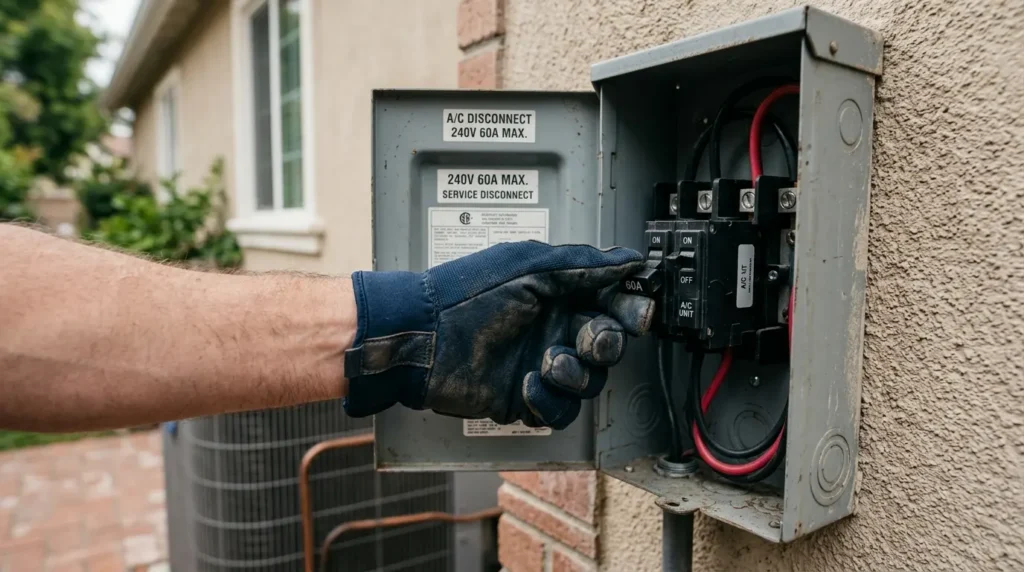
Air conditioning systems rely on two separate power sources: one for the indoor unit (furnace/air handler) and one for the outdoor unit (condenser/compressor).
If the circuit breaker for your outdoor unit trips, your indoor fan will keep running perfectly fine, pushing uncooled, warm room air through your home. Knowing why your AC stopped working suddenly often comes down to tracking down these hidden electrical trips.
- The Fix: Go to your home’s main electrical panel. Look for a heavy-duty double-pole breaker labeled “AC” or “Air Conditioner.” If it is tripped (positioned in the middle or toward the “Off” side), flip it completely to “Off” and then back to “On.” If it trips again immediately, do not reset it a second time—this indicates a dangerous electrical short, and you need a professional.
If your fan is on AUTO and your outdoor unit has power, it is time to look at the 5 main mechanical culprits.
1. A Heavily Clogged or Dirty Air Filter
It sounds too simple to be true, but a filthy air filter is the number one cause of dozens of HVAC symptoms, including an AC blowing warm air but running.
[Dirty Air Filter] ➔ Restricts Airflow ➔ Evaporator Coil Freezes ➔ System Blows Warm Air
How It Causes Warm Air
Your air conditioner doesn’t actually “create” cold; it removes heat from your indoor air. It does this by blowing warm indoor air across a freezing cold component called the evaporator coil (located inside your indoor unit). The refrigerant inside the coil absorbs the heat, leaving the air cold.
If your air filter is completely choked with dust, pet dander, and hair, the airflow drops significantly. Without enough warm air passing over the evaporator coil, the temperature of the coil drops below freezing. The moisture in the air condenses on the coil and turns to solid ice. Understanding how to troubleshoot a frozen AC will show you that once your indoor coil turns into a block of ice, it acts as an insulating barrier. The air passing through cannot touch the cold metal, meaning it doesn’t get cooled at all. It gets pushed back into your house completely warm.
Diagnostic Symptoms
- Airflow out of your vents feels weaker than usual.
- You hear a strange whistling or straining sound from your return vents.
- If you look at the indoor unit, you see ice forming on the copper refrigerant lines or the outside of the metal casing.
- Water is pooling around the base of your indoor unit (as the ice melts).
What You Can Do
- Turn the system off immediately. Switch your thermostat from “Cool” to “Off” and turn the fan to “On”. This stops the system from working itself to death and helps melt the ice.
- Pull the filter. Inspect it. If you cannot see light through it, it must be replaced.
- Wait for the thaw. It can take anywhere from 2 to 12 hours for a frozen evaporator coil to melt completely. Do not turn the AC back on until the ice is completely gone.
- Insert a clean filter and restart the system.
2. A Dirty Outdoor Condenser Coil
While the indoor unit removes heat from your home, the outdoor unit’s job is to dump that heat into the outside atmosphere. It does this via the condenser coil, which is the large metal cage surrounded by thin aluminum fins outside your home.
How It Causes Warm Air
If your outdoor unit is choked with grass clippings, mud, fallen leaves, dryer lint, or overgrown bushes, the heat trapped in the refrigerant has nowhere to go. This lack of airflow forces the system into overdrive, which is a major factor when you’re looking into why your AC is not cooling the house down.
Think of it like covering your car’s radiator with a blanket. The heat builds up inside the system, causing the compressor to overheat. When the compressor overheats, a safety mechanism called an internal overload switch shuts it down to prevent it from burning out.
With the compressor resting or broken, the refrigerant stops circulating. However, your indoor blower fan keeps running, pushing completely uncooled air through your home.
Diagnostic Symptoms
- The outdoor unit is running, but the fan on top is blowing cool air instead of hot air (normally, the air blowing out of the top of an AC should feel like a blow dryer).
- The outdoor unit looks visibly caked in dirt, cottonwood seeds, or debris.
- The system runs for a few minutes, shuts off for a few minutes, and repeats this cycle constantly (called short-cycling).
What You Can Do
You can safely clean your outdoor condenser unit yourself using a garden hose:
- Cut the power to the outdoor unit at the disconnect box located on the wall next to the unit.
- Clear away any weeds, bushes, or debris within a 2-foot radius of the unit.
- Using a garden hose with a spray nozzle (do not use a pressure washer, as it will crush and ruin the fragile aluminum fins), spray the exterior coils at a 45-degree angle downward.
- Wash away all built-up grime and dirt until the water runs clear. Let it dry, restore power, and check the indoor air.
3. Low Refrigerant Level (A Refrigerant Leak)
Refrigerant is the lifeblood of your air conditioning system. It is a chemical compound that cycles continuously between liquid and gas states, carrying heat out of your home.
A very common myth among homeowners is that air conditioners “consume” refrigerant over time, like gas in a car. This is false. Your AC is a permanently sealed system. If it is low on refrigerant, it means you have a leak.
How It Causes Warm Air
When refrigerant levels drop below the manufacturer’s specified threshold, the system loses its thermal capacity. There isn’t enough liquid chemical to absorb the volume of heat inside your home. If you are left wondering why your AC is blowing hot air, a leak in your closed copper loop is one of the most likely culprits.
Furthermore, low refrigerant causes a drop in pressure inside the system, which paradoxically causes the remaining refrigerant to run much colder than normal, freezing up the indoor evaporator coil (just like a dirty filter does). Eventually, the system cannot cool at all, resulting in your AC blowing warm air but running.
Diagnostic Symptoms
- A persistent, faint hissing or bubbling sound coming from the indoor or outdoor unit.
- Ice forming on the copper lines entering the outdoor unit.
- The AC runs continuously for hours on end without ever lowering the temperature even one degree.
What You Can Do
⚠️ Critical Note: This is the point where DIY troubleshooting ends.
By federal law, handling, recharging, and repairing refrigerant lines requires an EPA Section 608 certification. If you suspect a leak, do not buy DIY refrigerant cans from an auto parts store—these can completely ruin a home HVAC system. Turn off your system to prevent destroying the compressor and call an HVAC professional.
4. Failed Capacitor or Damaged Contactors
Inside your outdoor unit sits a handful of electrical components that do the heavy lifting. The two most common points of failure are the capacitor and the contactor.
| Component | What It Does | What Happens When It Fails |
| Capacitor | Acts like a giant, temporary battery that gives the compressor and outdoor fan the massive jolt of electricity needed to start up and run smoothly. | The outdoor fan or compressor cannot turn on, causing the system to circulate warm air indoors. |
| Contactor | A small switch that closes when the thermostat calls for cooling, sending 240 volts of electricity to the outdoor components. | Ants can get crushed inside them, or the electrical points can pit and arc, preventing power from reaching the compressor. |
How It Causes Warm Air
If the capacitor fails, your outdoor compressor cannot start up. However, the electrical circuit to your indoor air handler remains perfectly intact. Your indoor fan will spin joyfully, pulling warm air from your rooms and pushing it right back through your vents without ever passing it by an operational cooling mechanism. Reviewing the symptoms of a bad AC capacitor can help you determine if this specific little cylindrical device has gone bad.
Diagnostic Symptoms
- You hear a distinct, loud humming or buzzing sound coming from the outdoor unit, but the fan blades aren’t spinning.
- The top fan is spinning, but you don’t hear the deep rumble of the compressor motor kicking on.
- The top of the capacitor (visible through the service panel) looks swollen, bulged, or is leaking oil.
What You Can Do
Capacitors hold a lethal electrical charge even when the home breakers are turned off. While a highly handy DIYer with a multimeter can replace a capacitor safely, it requires strict safety protocols (discharging the capacitor with an insulated screwdriver). If you are not comfortable handling high-voltage components, leave this to a certified technician.
5. A Failing or Seized Compressor
The compressor is the heart of your entire HVAC system. It is a pump that compresses the low-pressure gas refrigerant into a high-pressure, hot gas, forcing it through the cooling cycle.
Because it does the hardest mechanical work in the entire system, it is subject to the most wear and tear.
How It Causes Warm Air
If a compressor experiences mechanical failure, suffers from electrical burnout, or simply seizes due to old age, it can no longer pump refrigerant. Without refrigerant circulation, no heat transfer occurs. Your indoor fan will continue to run because it operates on a separate motor, giving you that classic symptom of an AC blowing warm air but running.
Diagnostic Symptoms
- A loud clunking or shaking sound when the outdoor unit tries to start up.
- The outdoor unit trips the circuit breaker every single time it tries to kick on.
- The outdoor unit fan spins, but the air it vents is cool, and the compressor itself is burning hot to the touch but completely silent.
What You Can Do
A failed compressor is the most severe and expensive diagnosis in the HVAC world. It cannot be repaired; it must be completely replaced. If your system is more than 10 to 12 years old, understanding the overall AC compressor replacement cost will help you determine whether it is time to replace the entire outdoor unit rather than sinking thousands of dollars into a temporary fix.
Summary Troubleshooting Guide
To help you quickly diagnose your system before making a phone call, use this summary matrix to pinpoint your issue based on what you see and hear:
| What You Experience | Likely Culprit | Immediate Action |
| Vents blowing warm air, ice visible on indoor unit copper pipes | Clogged Air Filter / Frozen Coil | Turn system to OFF, turn fan to ON. Replace filter. Allow to thaw completely. |
| Vents blowing warm air, outdoor unit caked in dirt/debris | Dirty Condenser Coil | Shut off outdoor power breaker. Gently hose down the exterior fins. |
| Indoor fan running, outdoor unit completely silent | Tripped Breaker or Blown Fuse | Check main electrical panel. Reset breaker once. |
| Outdoor unit buzzing loudly, fan blades not spinning | Failed Capacitor | Call a professional to safely test and replace electrical components. |
| Faint hissing sound near coils, air won’t cool at all | Refrigerant Leak | Turn off system immediately to protect the compressor and call an HVAC technician. |
When to Call a Professional
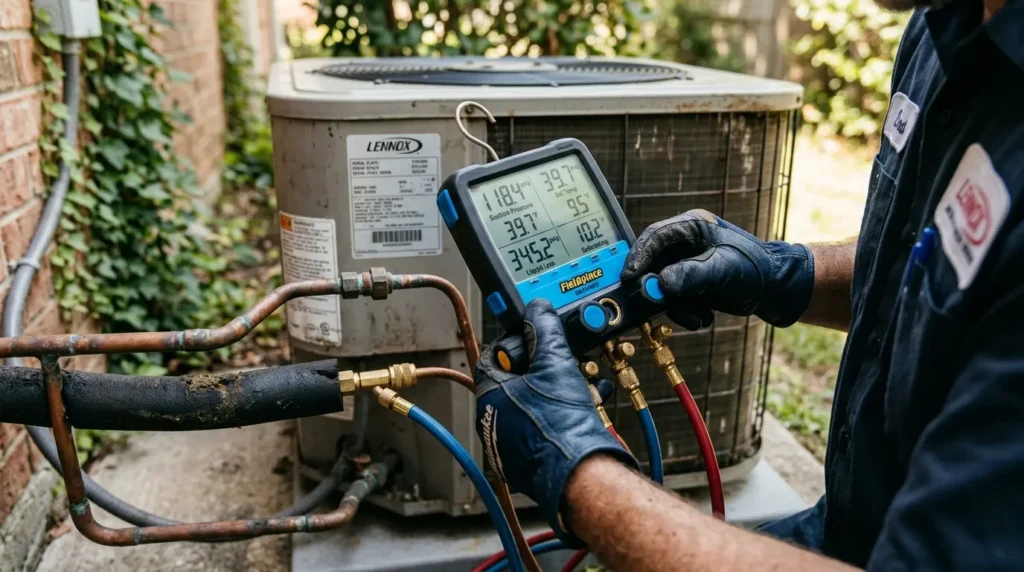
It is empowering to fix things yourself, and checking your filters, cleaning your condenser, or adjusting your thermostat can save you a $150 service fee. However, you must know your limits.
Call a certified HVAC technician immediately if:
- You hear hissing sounds (indicating a hazardous chemical refrigerant leak).
- Your system repeatedly trips the circuit breaker (this indicates a severe fire risk or electrical short).
- You suspect the compressor or capacitor has failed.
- You have performed all basic troubleshooting steps (replaced the filter, cleaned the unit, verified settings) and the air remains warm after two hours of operation.
Running an air conditioner that is malfunctioning can cause minor issues to compound into catastrophic failures. For instance, letting a system run with a clogged filter can cause liquid refrigerant to flood back into your compressor, destroying the most expensive part of your system. If in doubt, turn the system off at the thermostat and call in an expert to get your home back to a safe, comfortable temperature.