

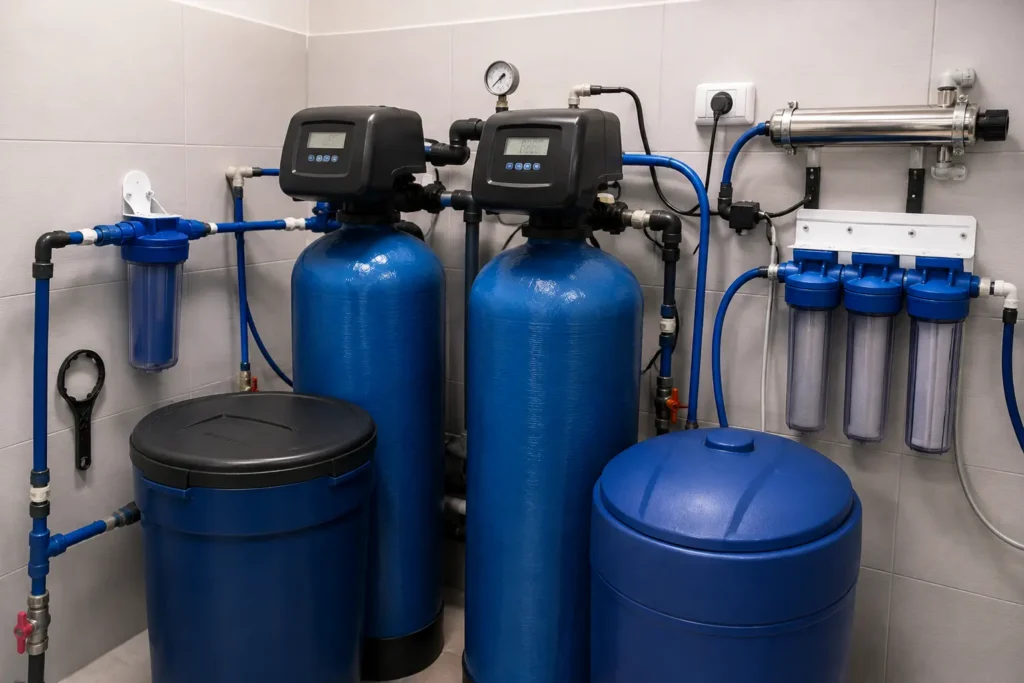
Owning a home with a private well offers independence from municipal water utilities, but it also means the quality and safety of every drop of water coming out of your tap rests entirely on your shoulders. If you rely on groundwater in the Bay State, installing a specialized Massachusetts well water filtration system is often the single most critical step you can take to protect your family’s health, safeguard your plumbing infrastructure, and restore pure, refreshing water to your home. Private wells across the region tap into dynamic underground aquifers that are constantly influenced by local soil composition, surrounding agricultural activities, and deep bedrock geology. Unlike public water supplies that undergo constant monitoring and treatment, private well water can carry unseen biological pathogens, dissolved heavy minerals, and dangerous gases without warning. Understanding the early warning signs of water contamination allows you to take decisive action before minor water issues escalate into costly home repairs or health concerns.
For homeowners throughout Southeastern Massachusetts, particularly across Bristol County towns like Easton, Raynham, Mansfield, Berkley, and Dartmouth, well water quality presents a unique set of regional challenges. The glacial geology of New England creates ground conditions rich in dissolved minerals, while historic industrial and agricultural practices add localized environmental stressors. Recognizing how your well water behaves, tastes, smells, and affects your household fixtures gives you the power to diagnose underlying issues early. Below is a comprehensive guide to identifying the clear signs that your well water requires a professional filtration solution, along with an in-depth look at the specific contaminants that threaten groundwater quality across Massachusetts homes.
The Unique Well Water Landscape of Bristol County and Massachusetts
Groundwater in Massachusetts does not originate from isolated, sterile reservoirs. Instead, it moves slowly through complex layers of glacial till, gravel, sand, and fractured granite or schist bedrock. As water percolates through these geological formations, it dissolves minerals, compounds, and heavy metals along the way.
In Bristol County and surrounding Southeastern Massachusetts communities, several environmental and geological factors directly impact private well water quality:
- Granite Bedrock and Radon Risk: Deep bedrock wells, which draw water from fractures in the underlying granite, are highly susceptible to naturally occurring radioactive elements. Radon gas and uranium dissolve into groundwater as bedrock breaks down over millennia.
- Elevated Iron and Manganese Deposits: The natural soil and rock strata of Bristol County contain heavy concentrations of iron and manganese. These elements readily leach into acidic groundwater, leading to severe aesthetic and functional issues in home plumbing.
- Coastal and Agricultural Runoff: From historical agricultural lands in southern Bristol County to coastal aquifers subject to saltwater intrusion and road salt runoff during icy New England winters, groundwater profiles can shift dramatically throughout the year.
- Shallow Well Vulnerabilities: Older, shallow dug wells are particularly prone to surface runoff contamination, picking up animal waste bacteria, fertilizers, pesticides, and local land-use pollutants after heavy rainfall events.
Because private wells are not regulated under the Safe Drinking Water Act, local property owners bear sole responsibility for testing, monitoring, and treating their water. Waiting for an obvious problem to manifest can mean months of exposure to subtle contaminants.
7 Critical Signs Your Massachusetts Well Water Needs Professional Filtration
1. Persistent Discoloration and Stubborn Staining on Fixtures
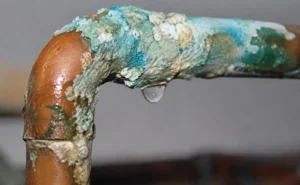
One of the most immediate visual indicators that your well water needs treatment is unexpected discoloration in your sinks, toilets, tubs, and laundry. Water should run completely crystal clear. If you notice persistent staining, the color of the stain offers a direct clue regarding the contaminant present in your well:
- Reddish-Brown or Rust-Colored Stains: This classic discoloration points directly to high concentrations of dissolved or oxidized iron. Iron leaves orange and reddish streaks on porcelain toilets, white ceramic sinks, and light-colored clothing in the washing machine.
- Dark Brown or Black Speckled Stains: Black or dark brown staining on fixtures, dishwasher interiors, and laundered garments typically indicates high levels of manganese. Manganese is often found alongside iron in Massachusetts groundwater and can be notoriously difficult to remove without specialized oxidation filtration.
- Turbid, Cloudy, or Muddy Water: If your water appears milky or cloudy when drawn from the tap, or if sediment settles at the bottom of a glass, your well may be drawing silt, sand, or fine clay from the aquifer. Sediment not only looks unappealing but also acts as an abrasive, quickly destroying delicate internal seals in faucets, valves, and home appliances.
When sediment or heavy iron content begins degrading your home’s infrastructure, relying on standard plumbing fixes alone will not solve the root issue. Partnering with technicians who provide expert professional plumbing services ensures your fixtures are repaired while establishing a baseline for incoming water filtration.
2. Foul Odors: Rotten Eggs, Metallic, or Earthy Smells
Your drinking water should be completely odorless. When unpleasant smells emanate from your faucets or showerheads, volatile gases or organic matter are escaping from the water stream into your living space.
- Rotten Egg Smell (Sulfur): A distinct smell of rotten eggs indicates the presence of hydrogen sulfide gas (H2S). Hydrogen sulfide is produced by sulfur-reducing bacteria living in low-oxygen well environments or naturally occurring chemical reactions in groundwater. Beyond being unpleasant, hydrogen sulfide is corrosive to metal piping and can tarnish silverware and copper fixtures overnight.
- Metallic Odor: A sharp, metallic smell strongly correlates with excessive dissolved iron, manganese, or low pH levels causing pipe leaching.
- Musty, Earthy, or Fishy Smells: These odors generally point to harmless but unpalatable organic matter, decaying vegetation entering shallow wells, or surface water entering an improperly sealed well cap.
If the rotten egg smell is only present when running hot water, the source might be a reaction between sulfate in the water and the magnesium anode rod inside your water heater. However, if the smell persists across both hot and cold lines, a whole-house well water treatment system is required.
3. Bitter, Metallic, Saline, or Chemical Taste
Taste and smell go hand in hand, but subtle chemical or metallic off-tastes can persist even when water appears completely clear.
- Metallic Taste: High levels of iron, zinc, or manganese create a harsh, coin-like metallic taste that ruins cooked meals, coffee, and tea.
- Salty or Saline Taste: A noticeable salty taste in Bristol County wells often stems from sodium chloride contamination. This can occur due to heavy winter road salting operations near wellheads, proximity to tidal estuaries, or saltwater intrusion into over-pumped coastal aquifers. High sodium levels pose health risks for individuals monitoring their blood pressure.
- Slightly Bitter or Astringent Taste: Bitter water is frequently linked to low pH levels (acidic water) or extremely high total dissolved solids (TDS), signaling that your water is actively leaching metals from your piping network.
4. Heavy Scale Buildup, Soap Scum, and Low Water Pressure
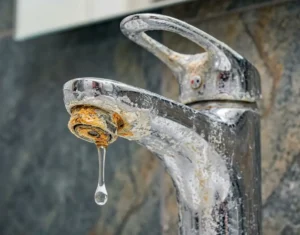
Hard water is defined by high concentrations of dissolved calcium and magnesium minerals. While not a direct health hazard, hard water causes extensive structural and financial damage across a residential property over time.
- White Crust on Faucets and Showerheads: Limescale deposits form crusty white ring patterns around drain openings, aerators, and shower doors.
- Dry Skin and Dull Hair: Hard water prevents soaps and shampoos from lathering efficiently, leaving a film of soap scum on your skin, scalp, and shower walls.
- Premature Appliance Failure and Clogged Pipes: Scale builds up inside hot water pipes, dishwasher heating elements, and washing machine valves. Over time, this restriction reduces water flow and drastically shortens the lifespan of water-using appliances.
Water heaters are particularly vulnerable to hard water scale. As calcium precipitates out of heated water, it forms a thick insulating layer of sludge at the bottom of the tank, causing overheating, loud popping sounds during heating cycles, and severe energy inefficiency. Integrating whole-house softening alongside routine water heater maintenance and plumbing solutions protects your system from premature breakdown.
5. Blue-Green Staining and Pinhole Leaks (Acidic Water)
Groundwater across Massachusetts is naturally prone to low pH levels due to the region’s soil composition and acidic rainfall patterns. Neutral water measures at a pH of 7.0; water with a pH below 6.5 is considered acidic and aggressive.
Acidic water aggressively dissolves copper, brass, and bronze components throughout your plumbing system. The primary indicators of acidic well water include:
- Blue-Green Stains: Striking blue-green copper stains appearing under faucets, inside porcelain sinks, or on shower floors.
- Pinhole Leaks in Copper Pipes: As acidic water slowly eats away at the inner walls of copper piping, microscopic leaks begin forming behind walls, in basements, and under floors.
- Metallic Tastes and Elevated Heavy Metals: Acidic water leaches copper and lead directly from pipe joints and brass fixtures into your drinking supply.
If you observe blue-green staining anywhere in your home, scheduling a comprehensive plumbing inspection is vital to evaluate existing pipe degradation while installing an neutralizing filtration system to stabilize your water’s pH.
6. Gastrointestinal Distress or Unexplained Illness
Biological contamination in a private well is particularly dangerous because bacteria, viruses, and parasites are completely invisible, odorless, and tasteless.
- Coliform Bacteria: While most coliform bacteria do not cause serious illness themselves, their presence in a well test indicates that surface water or surface runoff has entered your well shaft.
- E. coli (Escherichia coli): The presence of E. coli signals direct contamination from animal waste or septic system overflow. Ingesting E. coli leads to severe gastrointestinal distress, cramps, nausea, diarrhea, and serious health complications for young children, the elderly, and immunocompromised individuals.
Frequent illness among household members following heavy rain, spring snowmelts, or nearby excavation work warrants immediate water isolation and professional microbiological testing coupled with ultraviolet (UV) disinfection systems.
7. High Radon Gas Levels in Water
Massachusetts possesses some of the highest recorded radon levels in the northeastern United States. While many homeowners are familiar with airborne radon gas accumulating in basements, fewer realize that radon dissolves readily into groundwater drawn from deep bedrock wells.
When radon-bearing well water enters your home and is agitated—such as during showering, running the dishwasher, or doing laundry—the radon gas volatilizes out of the water and releases directly into your indoor air. Inhaling airborne radon released from well water increases long-term risks of developing lung cancer. Because radon is completely colorless, odorless, and tasteless, it can only be detected through specialized laboratory testing.
Niche Contaminants Common in Bristol County Well Water
Homeowners in Bristol County face a specific combination of geological and human-made water quality challenges. Understanding these targeted hazards highlights why off-the-shelf point-of-use pitcher filters are insufficient for whole-home safety.
       [ Regional Massachusetts Groundwater Profile ]
                            │
     ┌──────────────────────┼──────────────────────┐
     ▼                      ▼                      ▼
[ Geogenic ]           [ Biological ]        [ Environmental ]
 • Iron & Manganese     • Coliform Bacteria   • Road Salts (Sodium)
 • Radon & Uranium      • E. coli             • PFAS / Chemicals
 • Acidic pH (< 6.5)    • Surface Runoff      • Pesticides / Nitrates
Iron and Manganese Complexes
Iron and manganese are heavy metal elements abundant in Southeastern Massachusetts rock and soil. In well water, they exist in two primary forms:
- Soluble (Clear-Water Iron/Manganese): Water comes out of the tap completely clear but turns rusty or dark after sitting in a glass or basin as oxygen oxidizes the metal.
- Insoluble (Red-Water or Black Iron): Metal particles are already oxidized in the well and enter your home as visible particulate matter.
Additionally, iron bacteria can combine with iron in low-oxygen environments to produce a slimy, foul-smelling biofilm that clogs well screens, pressure tanks, and toilet flush tanks.
Radon and Heavy Radioisotopes
The granite deposits running beneath Bristol County mean deep drilled wells frequently tap into radioactive zones. The EPA recommends treating well water if radon levels exceed 4,000 pCi/L (picocuries per liter), though action may be recommended at lower thresholds if indoor air radon levels are already elevated.
PFAS (“Forever Chemicals”)
Per- and polyfluoroalkyl substances (PFAS) are industrial chemical compounds used for decades in firefighting foams, stain repellents, non-stick cookware, and waterproof fabrics. Due to historical industrial operations and military installations in region, PFAS contamination has been detected in private wells across several Southeastern Massachusetts towns. PFAS compounds do not break down naturally and accumulate in the human body, requiring high-grade carbon block or reverse osmosis technology for removal.
Nitrates and Agricultural Contaminants
In rural sections of Bristol County, historical livestock farming, fertilizer applications, and high-density septic systems contribute to elevated nitrate levels in shallow wells. High nitrates pose severe risks to infants under six months of age, interfering with the blood’s capacity to carry oxygen (blue baby syndrome).
Professional Well Water Filtration Solutions tailored for Massachusetts Homes
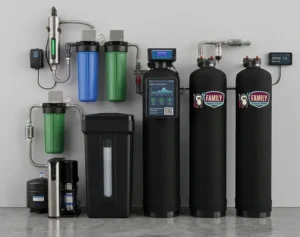
Addressing complex well water problems requires a tailored approach. A single generic filter cannot resolve acidic water, iron stains, bacterial risks, and radon simultaneously. Modern residential water treatment relies on targeted equipment designed around exact water chemistry profiles.
Evaluating high-performance whole-home water treatment and filtration solutions allows homeowners to select the exact technology needed for their specific well test results:
| Water Issue | Primary Indicator | Recommended Filtration Technology |
|---|---|---|
| High Iron & Manganese | Red/black staining, metallic taste | Air-Injection Oxidation (AIO) Filters / Manganese Greensand |
| Acidic Water (Low pH) | Blue-green stains, copper pipe leaks | Acid Neutralizer Tanks (Calcite / Corosex Media) |
| Hard Water Scale | Crusty scale buildup, poor soap lather | Ion-Exchange Water Softeners |
| Bacterial Contamination | Positive Coliform / E. coli tests | Ultraviolet (UV) Microbiological Disinfection Systems |
| Radon in Water | Positive lab test (> 4,000 pCi/L) | Diffused Bubble Water Aeration Systems |
| PFAS, Nitrates, & Chemicals | Lab-detected chemical compounds | Multi-Stage Reverse Osmosis / Catalytic Carbon Block |
| Sediment & Turbidity | Cloudy, gritty, or muddy water | Multi-Gradient Sediment Pre-Filters |
Whole-House Acid Neutralizer Systems
For acidic well water common in Massachusetts, a calcite neutralizer tank is installed at the main water entry line. As acidic water flows through sacrificial calcium carbonate media, the pH naturally rises to a neutral 7.0–7.2, instantly arresting copper pipe corrosion and eliminating blue-green staining.
Air-Injection Oxidation (AIO) Iron & Manganese Filters
AIO filtration systems introduce a pocket of compressed air into the filter tank. As raw well water passes through, dissolved iron, manganese, and hydrogen sulfide gas are instantly oxidized into solid particles. These solid particles are then trapped by a specialized media bed and automatically backwashed down the drain, restoring clear, odor-free water without harsh chemical additives.
Water Softeners (Ion-Exchange Systems)
Ion-exchange softeners replace hard mineral ions (calcium and magnesium) with harmless sodium or potassium ions. Softening your well water prevents scale formation inside tankless water heaters, protects plumbing infrastructure, and reduces household detergent consumption by up to 50%.
UV Microbiological Water Disinfection
Ultraviolet water purifiers pass incoming water through a high-intensity UV light chamber. The ultraviolet light disrupts the DNA of bacteria, viruses, and microbial cysts, rendering them completely sterile and harmless without altering the taste or chemical balance of your water.
Water Aeration for Radon Removal
When radon gas is present in groundwater, aeration systems provide the most effective treatment. These units agitate incoming water inside a sealed chamber, venting released radon gas safely out through a vent pipe above your roofline before sending the purified water to your taps.
The Importance of Annual Professional Water Testing

Because groundwater quality shifts seasonally with heavy rain, spring thawing, and local ground activity, private well owners should establish a routine water testing schedule.
       ┌──────────────────────────────────────────────┐
       │     Recommended Well Testing Timeline        │
       └──────────────────────────────────────────────┘
                              │
     ┌────────────────────────┴────────────────────────┐
     ▼                                                 ▼
[ Every 12 Months ]                             [ Every 3 to 5 Years ]
 • Coliform & E. coli Bacteria                   • Radon & Uranium
 • pH & Total Dissolved Solids                   • Heavy Metals (Lead/Arsenic)
 • Nitrates & Nitrites                           • PFAS & Volatile Organic
 • Iron, Manganese, & Hardness                     Compounds (VOCs)
Never rely on DIY test strips from big-box home improvement stores to confirm your drinking water is safe from invisible toxic elements or radioactive compounds. Certified laboratory water analysis provides precise parts-per-million (ppm) measurements, allowing water treatment specialists to size media tanks, flow rates, and backwash frequencies accurately for your home.
Protect Your Massachusetts Home with Professional Water Filtration
Ignoring the subtle warning signs of well water contamination—whether it is a faint rotten egg smell, blue-green stains on your tub, or limescale destroying your water heater—inevitably leads to expensive plumbing repairs, ruined appliances, and potential health risks for your family. Private wells across Bristol County and Massachusetts contain diverse mineral and biological profiles that demand proven, tailored engineering to correct.
A custom whole-house filtration system eliminates nuisance minerals, neutralizes destructive acids, and destroys harmful pathogens right where water enters your home. To diagnose your well water issues and explore customized treatment options, contact Family Heating, Cooling, Electric & Plumbing today to schedule a professional water quality evaluation and plumbing assessment.