

Few things in a home disrupt your daily routine quite like turning on the tap and being greeted by a weak, trickling stream. Whether you are stepping into the shower to start your day or standing at the kitchen sink trying to wash dishes, a sudden drop in water flow is frustrating and concerning.
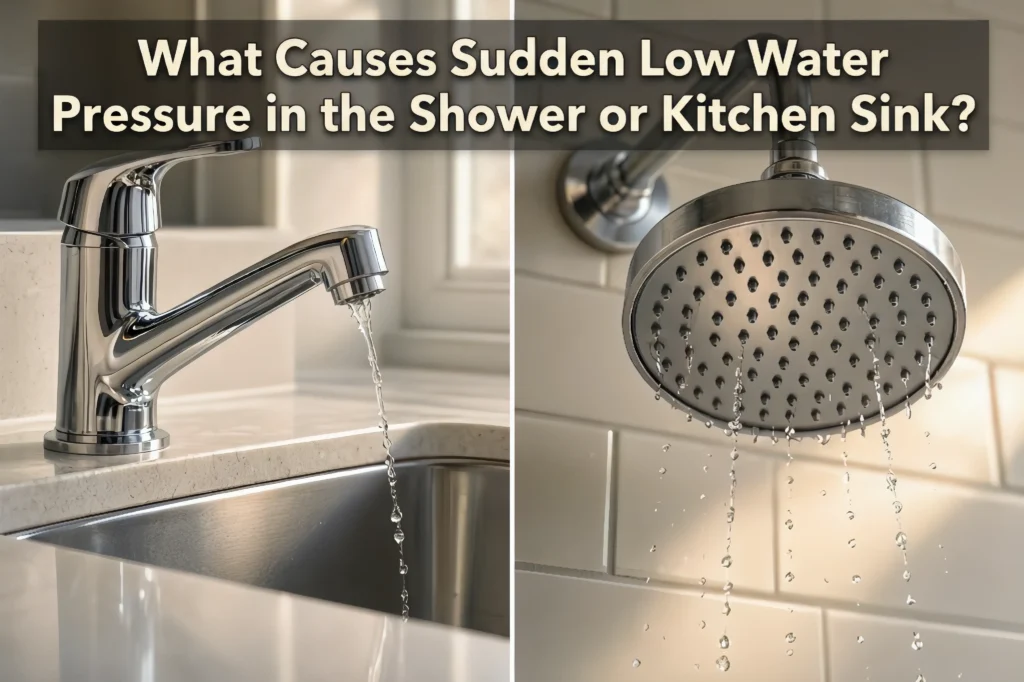
If you have noticed that your sudden low water pressure in shower fixtures has occurred without warning—or if your kitchen sink faucet has lost its normal power—you are not alone. While some plumbing issues build up gradually over years, experiencing sudden pressure drops across specific fixtures usually points to targeted culprits within your home’s plumbing network, water heater, or fixture components.
In this guide, we will break down the common causes of sudden pressure drops, explore crossover issues between fixtures and appliances, and provide step-by-step troubleshooting solutions so you know when to fix it yourself and when to call a professional.
Quick Answer: What Triggers a Sudden Drop in Water Pressure?
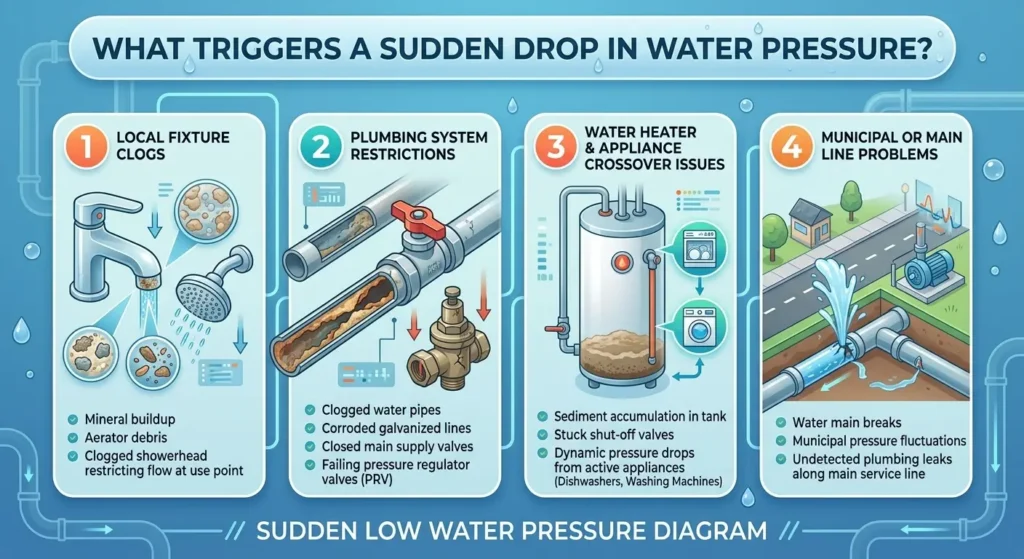
A sudden low water pressure issue usually stems from one of four main categories:
- Local Fixture Clogs: Mineral buildup, aerator debris, or a clogged showerhead restricting flow right at the point of use.
- Plumbing System Restrictions: Clogged water pipes, corroded galvanized lines, closed main supply valves, or failing pressure regulator valves (PRV).
- Water Heater & Appliance Crossover Issues: Sediment accumulation inside the water heater tank, stuck shut-off valves, or dynamic pressure drops caused by active appliances like dishwashers and washing machines.
- Municipal or Main Line Problems: Water main breaks, municipal pressure fluctuations, or undetected plumbing leaks along your main service line.
To learn more about keeping your home’s plumbing systems running smoothly, explore expert solutions from Family Heating, Cooling, Electric & Plumbing.
Is the Pressure Loss Isolated or House-Wide?
Before diving into repairs, the first critical step is diagnosing the extent of the issue. Determining whether the drop is localized to a single fixture or affecting the entire house will quickly narrow down the root cause.
                    [ Test Multiple Fixtures Around the Home ]
                                      |
         +----------------------------+----------------------------+
         |                                                         |
[ Single Fixture Affected ]                               [ Entire House Affected ]
         |                                                         |
         v                                                         v
• Aerator or showerhead clog                             • Main shut-off valve partially closed
• Diverter valve malfunction                             • Failed Pressure Regulator Valve (PRV)
• Dedicated fixture valve issue                          • Major main line leak or pipe collapse
                                                         • Municipal supply / main break issue
1. Isolated to One Fixture (Shower or Kitchen Sink Only)
If your kitchen sink faucet has weak flow but the bathroom sink and shower work perfectly, the problem is isolated to that specific fixture. Common local causes include:
- A clogged faucet aerator or showerhead nozzle.
- A faulty internal cartridge or mixer valve.
- A partially closed shut-off valve under the sink.
2. Isolated to Hot Water Only
If cold water blasts with full force but hot water trickles out, the issue is directly tied to your hot water system. This usually points to sediment buildup inside your water heater, a stuck water heater shut-off valve, or thermal expansion tank issues.
3. Affecting the Entire House
When you experience sudden low water pressure house-wide across both hot and cold taps simultaneously, the culprit is systemic. Key causes include a partially closed main shut-off valve, a broken Pressure Regulator Valve (PRV), a major main supply line leak, or an issue with your local municipal water supplier.
Primary Causes of Sudden Low Water Pressure in the Shower
When your sudden low water pressure in shower systems happens without warning, the issue generally lies within the showerhead assembly, the shower valve cartridge, or the hot water supply line.
[ Sudden Drop in Shower Water Pressure ]
                          |
   +----------------------+----------------------+
   |                      |                      |
[ Mineral / Scale ]   [ Cartridge Valve ]    [ Diverter Valve ]
   |                      |                      |
   v                      v                      v
Clean showerhead       Replace shower        Repair or replace
nozzles with vinegar    cartridge unit        tub spout diverter
1. Clogged Showerhead Nozzles and Mineral Scale
Over time, minerals like calcium and magnesium present in hard water accumulate inside the small spray nozzles of your showerhead. A sudden dislodging of sediment inside your pipes can flush scale straight into the showerhead, causing an abrupt drop in water output.
- Quick Fix: Unscrew the showerhead and inspect the inlet screen. Soak the showerhead in a container of white vinegar for 2–4 hours to dissolve mineral deposits, then scrub the nozzles with an old toothbrush before reinstalling.
2. Malfunctioning Shower Cartridge Valve
Inside your shower handle is a pressure-balancing cartridge that mixes hot and cold water while regulating flow. If dirt, rust, or mineral bits enter the cartridge, or if its internal seals fail, it can jam the mixing mechanism and drastically choke water pressure.
- Symptom: The water pressure drops significantly when turning the handle toward hot or cold, or temperature fluctuates wildly alongside the pressure drop.
3. Faulty Tub-to-Shower Diverter Valve
If you have a combination tub and shower set, the diverter valve on the tub spout routes water upward to the showerhead. If the diverter gate snaps, gets stuck, or wears out, water continues leaking out of the tub spout rather than building sufficient pressure for the showerhead.
Primary Causes of Sudden Low Water Pressure in the Kitchen Sink
The kitchen sink is one of the most heavily used plumbing fixtures in any home. When pressure suddenly drops at the kitchen tap, check these three common points of failure:
1. Clogged Faucet Aerator
The aerator is the small mesh screen screwed onto the tip of your kitchen faucet nozzle. Its purpose is to shape the water stream and prevent splashing. Because it acts as the final filter, rust flakes, silt, and mineral debris flowing through your pipes become trapped here.
- Troubleshooting Step:
- Unscrew the aerator counterclockwise (use pliers wrapped in a cloth if stuck).
- Flush out loose debris under running water.
- Soak the mesh screen in vinegar to dissolve hard water scale.
- Turn on the faucet without the aerator attached. If the flow is full and strong, the clogged aerator was the sole cause!
2. Stuck Pull-Out / Pull-Down Sprayer Hose
Modern kitchen faucets feature pull-out sprayers equipped with internal check valves to prevent backflow. If the internal check valve sticks or if the sprayer head filter screen gets clogged with sediment, water flow slows to a trickle.
3. Under-Sink Supply Line Shut-Off Valves
Underneath your kitchen sink are two shut-off valves (one for hot water, one for cold). If these valves were recently bumped, partially turned during cabinet storage, or suffer from internal washer degradation, water supply to the faucet will be restricted.
Crossover Plumbing Issues: Water Heaters, Appliances, and Clogged Pipes
Plumbing systems are interconnected networks. A problem originating in one appliance or line can easily manifest as sudden low water pressure in shower setups or at your kitchen sink.
1. Sediment Accumulation in Water Heaters
Water heaters collect mineral sediment at the bottom of the tank over time. When heavy sediment builds up, it can float into the hot water outlet pipe, partially blocking supply lines feeding your shower and kitchen taps.
[ Heavy Tank Sediment ] ──> [ Hot Outlet Pipe Blockage ] ──> [ Low Pressure at Fixture ]
To prevent system-wide water heater restrictions, schedule regular maintenance and system checks with certified experts like Family Heating, Cooling, Electric & Plumbing Plumbing Services.
2. Clogged Water Pipes and Internal Corrosion
In older homes with galvanized steel or iron piping, corrosion and mineral scale build up on pipe interior walls over decades. Eventually, a piece of internal rust or scale snaps off and lodges in an elbow, tee joint, or narrow pipe section, causing a severe block in flow.
- Identifying Clogged Water Pipes: If pressure drops suddenly and stays low despite replacing fixture aerators and cartridges, internal pipe blockages or severe corrosion may be restricting flow within your walls.
3. Appliance Pressure Competition (Dynamic Pressure Drops)
If your shower or kitchen sink pressure drops dramatically only when the dishwasher, washing machine, or lawn sprinklers are running, your home is experiencing a dynamic flow imbalance. This usually indicates that your main supply pipe size is inadequate or your pressure regulator is failing to adjust to high demand.
Whole-House System Failures To Check
If your testing confirms a sudden low water pressure house-wide issue, examine these three primary whole-house components:
1. Partially Closed Main Water Shut-Off Valve
Your home features a main water shut-off valve (usually located where the main water pipe enters the house, near the water meter, or in the basement/crawlspace). If utility work was recently performed or if the valve was accidentally bumped, even a slight turn can severely throttle overall household water pressure.
- Action: Inspect the main valve. Ball valves should have handles fully parallel to the pipe. Gate valves should be turned fully counterclockwise until open.
Ball Valve (Open): [=== Pipe ===]====( Handle Parallel )====[=== Pipe ===]
Gate Valve (Open): Turn knob FULLY COUNTERCLOCKWISE until open.
2. Failing Pressure Regulator Valve (PRV)
Many homes feature a Pressure Regulator Valve (PRV) installed on the main service line to cap incoming city water pressure at a safe level (typically 45–60 PSI). When a PRV fails internally, its diaphragm or spring mechanism can break, causing home water pressure to drop instantly or fluctuate wildly.
- Diagnosis: A licensed plumber can attach a pressure gauge to an outdoor hose bibb to test static house pressure and confirm whether the PRV needs replacement.
3. Main Supply Line Leaks
A sudden burst pipe or hairline crack in your underground main service line running between the water meter and your home will bleed off water pressure before it ever reaches your taps.
- Sign of a Main Line Leak: Unusually soggy patches in your yard, water pooling in the basement, or an unexpectedly high municipal water bill.
Step-by-Step Troubleshooting Checklist
Follow this simple checklist to isolate and resolve your sudden pressure loss:
| Step | Action Item | Target Area | Expected Result |
| 1 | Test all faucets, showers, and toilets | Whole House | Determine if the issue is isolated or house-wide |
| 2 | Clean faucet aerator and showerhead | Single Fixture | Removes trapped mineral scale and grit |
| 3 | Check under-sink shut-off valves | Kitchen / Bathroom Sink | Ensures valves are 100% open |
| 4 | Check hot vs. cold water pressure | Water Heater Line | Pinpoints hot-water-only restrictions |
| 5 | Inspect main house shut-off valve | Main Supply Line | Verifies the main valve handle is fully open |
| 6 | Monitor water meter for hidden leaks | Plumbing Infrastructure | Detects unseen main line or slab leaks |
DIY Fixes vs. When to Call a Professional Plumber
While cleaning an aerator or turning a shut-off valve is an easy afternoon DIY task, many plumbing issues require specialized tools and expert expertise.
When You Can DIY:
- Cleaning or replacing clogged showerheads and faucet aerators.
- Adjusting under-sink or main shut-off valve handles.
- Soaking removable fixture parts in vinegar solutions.
When to Call a Professional Plumber:
- Failing Pressure Regulator Valves (PRV): Requires cutting and re-soldering or fitting main supply lines.
- Persistent Clogged Water Pipes: Clearing deep-set pipe blockages or replacing corroded galvanized lines.
- Water Heater Maintenance & Repairs: Flushing heavy sediment, replacing faulty shut-off valves, or repairing heating elements.
- Hidden Pipe Leaks: Detecting slab leaks or underground supply line cracks using electronic leak detection equipment.
If you are dealing with unexplained household plumbing drops or need rapid local assistance, reach out to the certified plumbing team at Family Heating, Cooling, Electric & Plumbing Contact Page.
Frequently Asked Questions (FAQ)
Why did my water pressure drop suddenly in just one room?
When water pressure drops in a single room (like a kitchen or bathroom), the issue is almost always localized to that room's fixture aerator, showerhead nozzles, internal cartridge valve, or dedicated under-sink supply valve.
Can a water heater cause low water pressure in the shower?
Yes. Severe sediment buildup inside a water heater tank can travel into the hot water outlet lines, choking off hot water supply. Additionally, a partially closed or faulty hot water shut-off valve above the water heater will reduce pressure at all hot water taps.
How do I know if my water pipes are clogged?
If aerators and cartridges are clean but water flow remains weak, your pipes may have internal scale or rust buildup. A professional plumber can perform a pressure drop test or camera inspection to locate clogged water pipes within your walls.
Final Thoughts
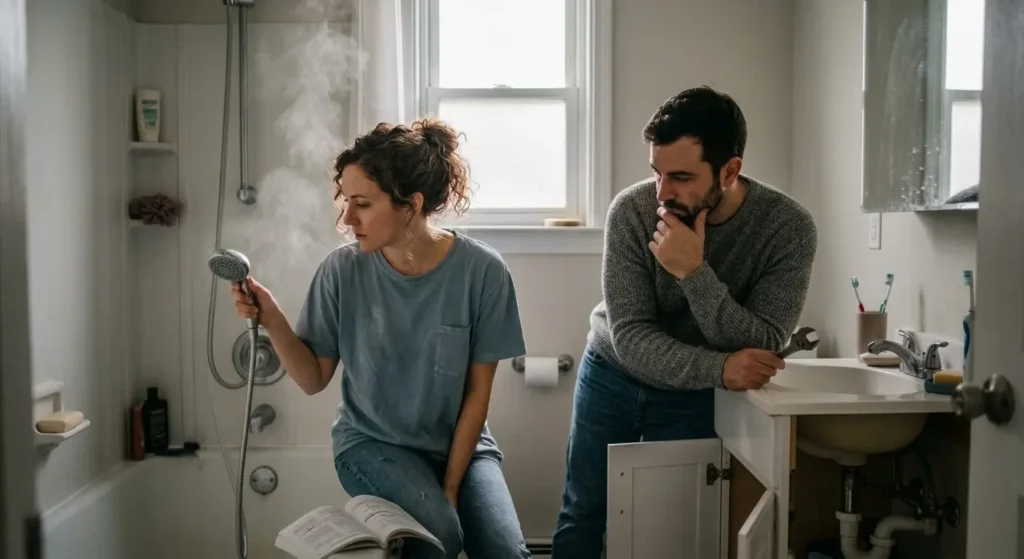
Experiencing sudden low water pressure in shower setups or kitchen sinks is inconvenient, but systematically narrowing down the source makes finding a solution straightforward. By starting with simple checks—like cleaning aerators and verifying valve positions—you can quickly solve minor issues yourself. For systemic problems involving water heaters, main lines, or failing valves, relying on professional plumbing experts ensures your home’s system remains safe, efficient, and reliable.