
Understanding how long does a central ac unit last is essential for maintaining consistent home comfort, managing energy bills, and making informed financial decisions. As a central air conditioner ages, its mechanical components naturally degrade, leading to reduced efficiency and a higher likelihood of sudden breakdowns.
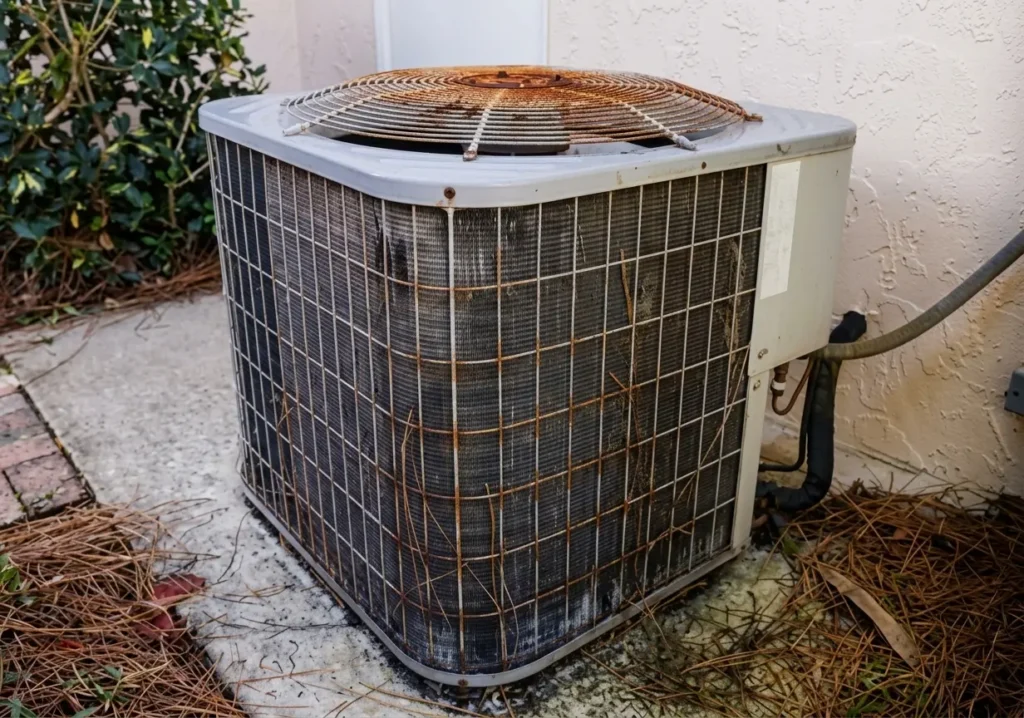
Whether your current system is blowing lukewarm air or you are trying to budget for an impending home improvement project, knowing the typical lifespan of a central air conditioner—along with the primary warning signs that it is failing—will help you decide whether to repair or replace your system.
What Is the Average Lifespan of a Central AC Unit?
On average, a well-maintained central air conditioning system lasts between 15 and 20 years. However, this range depends heavily on how hard the unit works, regional climate conditions, the quality of the initial installation, and whether routine preventative service is performed.
+-----------------------------------------------------------------------+
|                 AVERAGE LIFESPAN OF COOLING EQUIPMENT                 |
+-----------------------------------------------------------------------+
|  Heat Pumps                       | 10 - 15 Years                     |
|  Standard Central AC Units        | 15 - 20 Years                     |
|  Ductless Mini-Splits             | 15 - 20 Years                     |
|  High-End Well-Maintained Systems | 20+ Years                         |
+-----------------------------------------------------------------------+
Modern central air conditioners built within the last decade are engineered with advanced components, such as variable-speed compressors and eco-friendly refrigerants, that can push equipment life toward the 20-year mark when properly cared for. Conversely, units that run continuously in hot climates or lack basic maintenance may fail in under 10 to 12 years.
5 Factors That Impact How Long Your Central AC Lasts
While the 15-to-20-year lifespan serves as a reliable benchmark, individual system longevities vary. Key variables influence how long your unit remains functional:
1. Routine Maintenance History
The single largest factor controlling equipment longevity is maintenance. Dust, dirt, and neglected mechanical parts force your air conditioner to work twice as hard to cool your home, leading to overheating, worn bearings, and premature motor failure. Scheduling annual AC tune-ups keeps internal components clean, ensures proper lubrication, verifies electrical connections, and prevents minor wear from escalating into major component failures.
2. Quality of Installation
Even the highest-rated central air conditioner will fail prematurely if installed improperly. Correct sizing, accurate ductwork integration, precise refrigerant charging, and proper airflow calibration are vital during installation. An oversized unit will short-cycle (turn on and off too frequently), wearing out the compressor early, while an undersized unit will run continuously, causing excessive thermal stress on internal electrical systems.
3. Local Climate and Operating Demand
Homeowners in hot regions run their cooling systems for six to eight months out of the year, subjecting the compressor and outdoor condenser fan to heavy operating hours. Homeowners in cooler regions may only rely on cooling for two to three months per year. The higher your total annual operating hours, the sooner mechanical components will reach the end of their design life.
4. Air Filter Management
A dirty or clogged air filter restricts airflow across the evaporator coil. When airflow is restricted, the evaporator coil cannot absorb heat effectively, which can cause the coil to freeze over. Liquid refrigerant can then flood back to the compressor, causing catastrophic mechanical damage. Replacing air filters regularly is vital—learn how often to change your HVAC filter to avoid unnecessary equipment strain.
5. Exposure to Outdoor Elements
The outdoor condenser unit is constantly exposed to weather, yard debris, leaves, grass clippings, and coastal salt air. Units located near trees without proper clearance can accumulate debris around the aluminum fins, obstructing airflow and raising internal operating temperatures.
7 Clear Signs It Is Time to Replace Your Central AC Unit
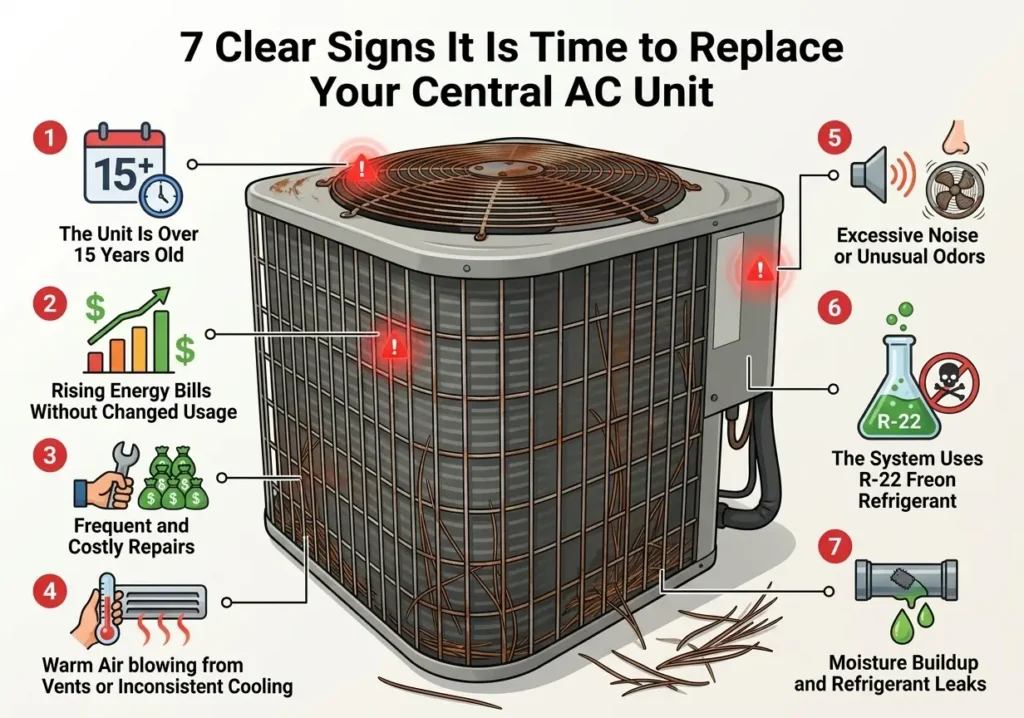
Understanding how long a central ac unit lasts helps set expectations, but physical symptoms will indicate when your equipment is approaching total failure. Watch for these seven red flags:
1. The Unit Is Over 15 Years Old
If your central AC unit has crossed the 15-year threshold, it is operating in its golden years. Even if it continues to run, its seasonal energy efficiency ratio (SEER) is likely significantly lower than modern units, resulting in higher monthly energy bills.
2. Rising Energy Bills Without Changed Usage
If your electrical bills spike during the summer months despite your cooling habits remaining unchanged, your system is losing structural efficiency. Internal component wear, dirty internal coils, or compressor degradation force the system to consume significantly more kilowatt-hours to reach the set temperature on your thermostat.
3. Frequent and Costly Repairs
Are you calling an HVAC technician every summer to replace capacitors, fan motors, or contactors? Occasional repairs on a 5-year-old system make financial sense, but frequent service calls on an older system quickly turn into a money pit.
4. Warm Air blowing from Vents or Inconsistent Cooling
When your central AC unit runs continuously without reaching the thermostat’s set temperature—or blows warm air from the supply registers—it typically points to a compromised compressor, failing fan motor, or severe refrigerant loss.
5. Excessive Noise or Unusual Odors
Modern air conditioners operate quietly. Rattling, grinding, squealing, or loud banging noises coming from either the indoor air handler or the outdoor condenser signal loose internal parts, failing motor bearings, or broken compressor springs. Burning smells indicate electrical issues, while persistent musty odors point to mold accumulation inside the coil drain pan or ductwork.
6. The System Uses R-22 Freon Refrigerant
If your system was manufactured prior to 2010, it likely relies on R-22 Freon. Production and importation of R-22 were phased out under EPA regulations due to environmental impacts. Repairing a refrigerant leak on an R-22 system is extremely expensive. If your older system leaks refrigerant, replacing the entire unit with a modern R-410A or A2L-compliant system is generally the most financial choice.
7. Moisture Buildup and Refrigerant Leaks
While minor condensation around the drain line is normal, pooled water around your indoor unit signals a clogged condensate line or a cracked drain pan. Oily residue around copper lines indicates a refrigerant leak. Running a system low on refrigerant causes thermal stress and will eventually destroy the compressor.
The $5,000 Rule: Should You Repair or Replace?
Deciding whether to repair an aging unit or invest in a new air conditioner can be difficult. HVAC professionals often rely on the $5,000 Rule to provide an objective financial calculation:
$$\text{Age of System (Years)} \times \text{Repair Cost (\$) } = \text{Decision Index}$$
- If the total is LESS than $5,000: Repairing the system is generally the economical choice.
- If the total is GREATER than $5,000: Replacement is typically the smarter long-term investment.
+---------------------------------------------------------------------------------+
|                         REPAIR VS. REPLACE DECISION MATRIX                      |
+---------------------------------------------------------------------------------+
|  System Age | Estimated Repair Cost | Calculation (Age x Cost) | Recommendation |
+-------------+-----------------------+--------------------------+----------------+
|  8 Years    | $400                  | 8 x $400 = $3,200        | Repair         |
|  12 Years   | $500                  | 12 x $500 = $6,000       | Replace        |
|  16 Years   | $350                  | 16 x $350 = $5,600       | Replace        |
+---------------------------------------------------------------------------------+
For instance, if your 12-year-old system requires a $500 motor replacement ($12 \times 500 = \$6,000$), the $5,000 threshold is exceeded. Investing that repair money into a modern, energy-efficient system yields better long-term value.
How to Extend the Life of Your Central AC Unit
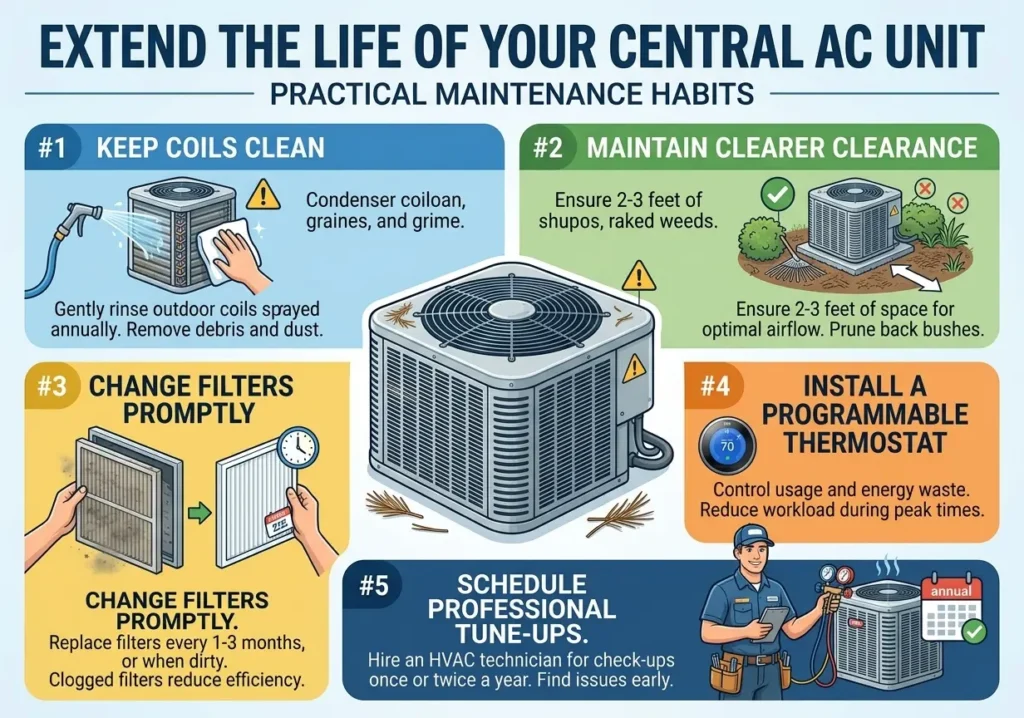
You can directly control how long your central ac unit lasts by taking proactive steps to protect your investment. Follow these practical maintenance habits:
1. Keep Coils Clean
Dirty coils severely reduce your system’s ability to transfer heat. Dust builds up on indoor evaporator coils, while outdoor condenser coils gather dirt, lawn clippings, and leaves. Periodically clearing debris around the outdoor unit and knowing how to clean AC coils will restore system efficiency and prevent component overheating.
2. Maintain Clear Clearance Around the Condenser
Keep shrubs, flowers, weeds, and outdoor storage items at least 2 feet away from the outdoor condenser unit on all sides. Restricted airflow around the condenser fan raises internal operating temperatures and shortens motor life.
3. Change Filters Promptly
Replace standard 1-inch air filters every 30 to 90 days. If you have pets or live in a dusty area, check filters monthly. Clean filters protect the indoor blower motor and maintain proper system static pressure.
4. Install a Programmable or Smart Thermostat
Using a smart thermostat allows you to set automatic temperature schedules so your central AC does not run at full speed when no one is home. Reducing unnecessary operational cycles lowers overall mechanical wear over the unit’s lifespan.
5. Schedule Professional Annual Tune-Ups
Enlisting professional HVAC technicians to inspect electrical connections, measure motor amps, check refrigerant levels, inspect ductwork, and calibrate safety controls once a year prevents minor issues from causing total system failure.
Benefits of Replacing an Old Central AC Unit
While purchasing a new air conditioner requires an upfront investment, upgrading an outdated system offers long-term financial and operational benefits:
- Lower Monthly Energy Bills: Modern air conditioners feature higher SEER2 efficiency ratings. Upgrading from a 10 SEER system to a 16+ SEER2 unit can cut cooling costs by 30% to 50%.
- Improved Indoor Comfort and Humidity Control: Modern multi-stage and variable-speed compressors adjust their output to match exact cooling demands, eliminating temperature swings and managing indoor humidity levels effectively.
- Quieter Operation: Advances in sound-dampening technology, insulated compressor blankets, and swept-wing fan blades make new central air conditioners significantly quieter than systems built 15 years ago.
- Comprehensive Warranty Coverage: New installations typically come with 10-year parts warranties, shielding you from unexpected out-of-pocket repair costs.
- Eco-Friendly Performance: Modern systems use non-ozone-depleting refrigerants that meet current EPA standards, reducing your household’s environmental footprint.
Frequently Asked Questions
Can a central AC unit last 25 years?
While rare, a central AC unit can last 20 to 25 years if installed correctly in a moderate climate and given routine maintenance. However, after 15 to 20 years, electrical components degrade and efficiency drops significantly, making replacement more cost-effective than continued repairs.
Is it worth replacing a 15-year-old AC unit if it still works?
If your 15-year-old AC unit is operating without issues and your energy bills remain reasonable, immediate replacement may not be required. However, preparing for replacement early allows you to plan your budget and choose a new unit without the stress of an emergency breakdown during peak summer heat.
Should I replace both the indoor air handler and outdoor unit at the same time?
Yes. Central AC systems are designed to operate as matched pairs. Connecting a new outdoor condenser to an old indoor evaporator coil lowers system efficiency, voids manufacturer warranties, and accelerates component failure.
Make the Right Choice for Your Home Comfort
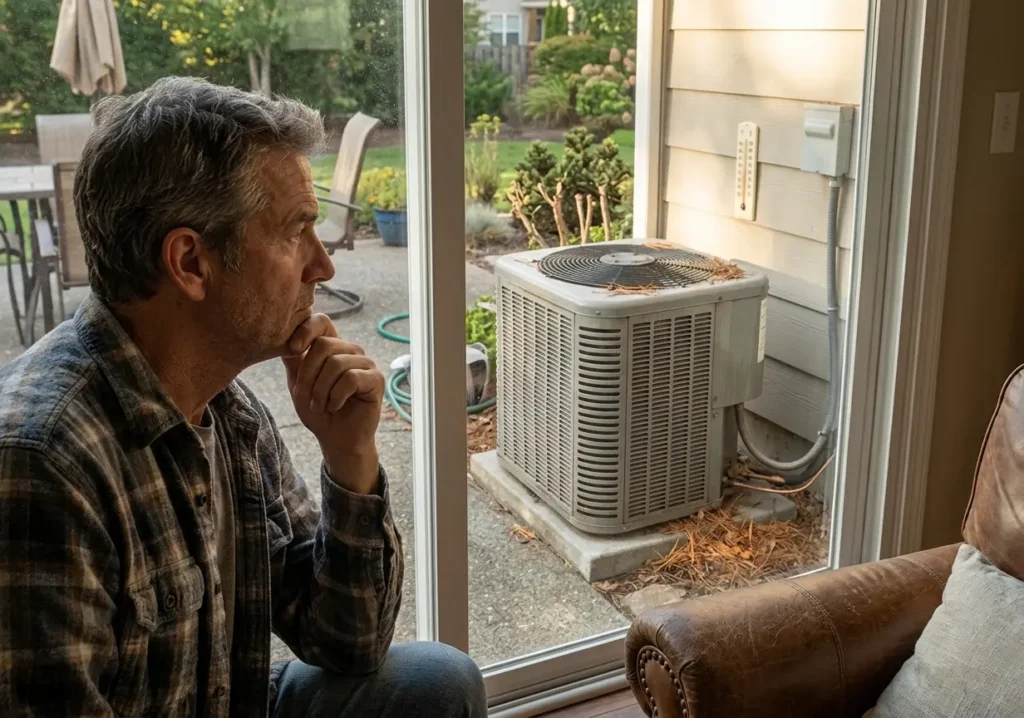
Understanding how long does a central ac unit last allows you to make informed decisions about your home’s HVAC system. If your unit is approaching the 15-to-20-year mark, showing signs of reduced efficiency, or requiring frequent repairs, evaluating replacement options early will keep your home comfortable while preventing sudden breakdowns.
If you need expert assistance diagnosing cooling issues, scheduling preventative maintenance, or exploring modern high-efficiency options, review how to select qualified professionals by checking out how to choose the best HVAC contractors. When you are ready to upgrade your home’s cooling system, partner with experienced local specialists by contacting Family Heating, Cooling, Electric & Plumbing to schedule a comprehensive system inspection and free replacement estimate.