

When your HVAC system begins producing disruptive, unexpected heat pump noises, it is easy for any homeowner to feel an immediate wave of panic. Your heat pump is the backbone of your home’s year-round climate control, keeping your family warm through freezing winter nights and comfortably cool during humid summer days. Under normal operating conditions, a healthy system operates with a gentle, consistent hum. However, when sudden metallic clunking, ear-piercing squealing, or high-pressure hissing breaks the silence, your unit is sending a clear cry for help. Ignoring these auditory warning signs can quickly turn a minor, inexpensive component fix into a catastrophic system failure or an expensive emergency replacement.
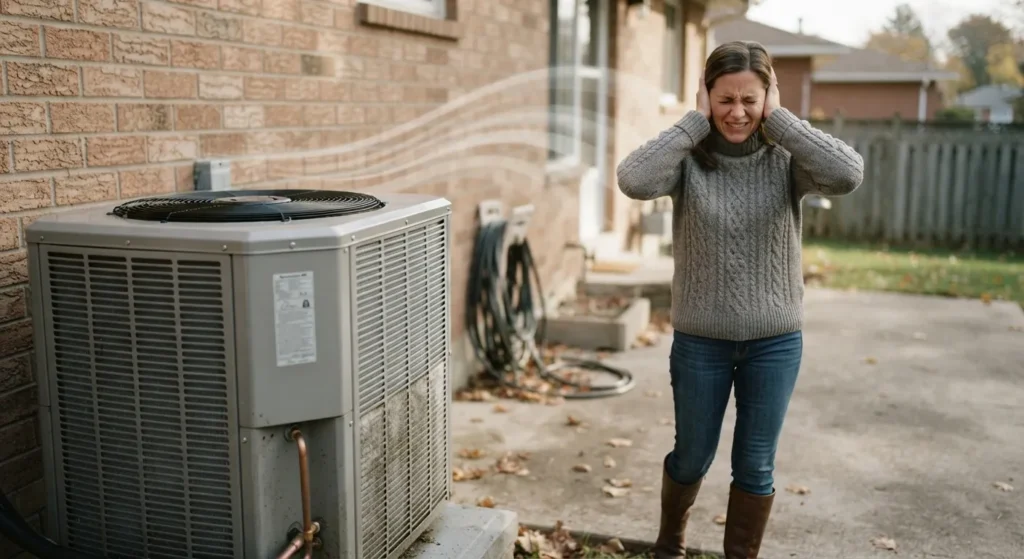
Understanding the root cause behind these jarring sounds is the crucial first step toward protecting your investment and restoring your peace of mind. Whether the sound is coming from your outdoor condenser pad or reverberating through your indoor supply vents, every distinct pitch and rhythm points to a specific mechanical or electrical component in distress. In this comprehensive guide, we will break down the exact meaning behind loud clunking, squealing, and hissing sounds, explain which issues require immediate system shutdown, and outline when it is time to bring in certified professionals for expert heat pump repair.
1. Loud Clunking or Bang Sounds: Loose, Damaged, or Striking Parts
A sudden, sharp clunking or heavy banging noise coming from either your indoor air handler or outdoor condenser unit is rarely something you should ignore. Unlike light tapping or minor thermal expansion pops, heavy clunking typically indicates that a heavy moving component has worked itself loose, suffered structural damage, or is physically striking another part of the system during operation.
Worn or Failing Compressor Isolation Mounts
Inside your outdoor heat pump unit sits the compressor—the heart of the entire heating and cooling process. Because the compressor operates under high mechanical pressure, it is mounted on heavy-duty rubber grommets and springs designed to absorb kinetic vibrations. Over time, heat exposure, weather conditions, and general mechanical wear cause these rubber mounts to harden, crack, or completely break down.
When the isolation mounts collapse, the compressor is no longer cushioned. Every time the system cycles on or off, the compressor shifts violently against its metal housing, producing a heavy, metallic clunk. If left unaddressed, this severe vibration will eventually crack connected copper refrigerant lines, leading to major leaks and severe system damage.
Loose or Bent Fan Blades
Both your indoor blower motor and outdoor condenser fan feature precision-balanced blades designed to rotate thousands of times per minute. If debris such as tree branches, ice accumulation, or small rocks enter the outdoor cage, it can bend a fan blade out of alignment.
As the motor spins, the bent blade repeatedly strikes the protective outer cage or internal casing, creating a rhythmic clunking or loud metallic slapping sound. Similarly, if the fan mounting bolt loosens over time, the entire fan assembly will wobble on its shaft, clunking heavily against adjacent components with every rotation.
Dislodged Internal Blower Components
Inside your home’s air handler, the blower wheel works continuously to circulate warm or cool air through your duct network. If a balance clip falls off the blower wheel or a internal mounting bracket snaps, the fan wheel will spin out of balance. This causes the wheel to strike the surrounding scroll housing, generating a deafening clunking noise whenever your heating or air conditioning runs.
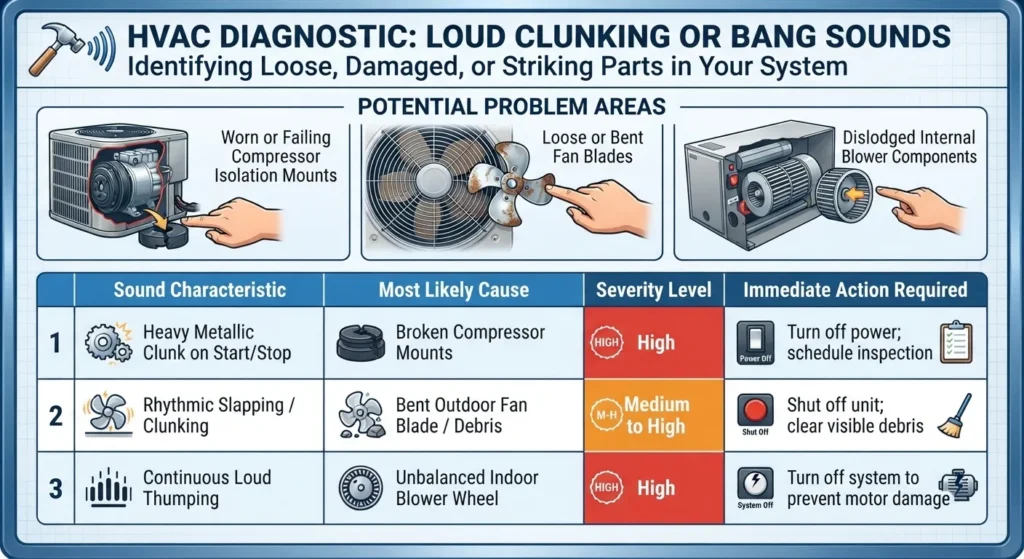
| Sound Characteristic | Most Likely Cause | Severity Level | Immediate Action Required |
| Heavy Metallic Clunk on Start/Stop | Broken Compressor Mounts | High | Turn off power; schedule inspection |
| Rhythmic Slapping / Clunking | Bent Outdoor Fan Blade / Debris | Medium to High | Shut off unit; clear visible debris |
| Continuous Loud Thumping | Unbalanced Indoor Blower Wheel | High | Turn off system to prevent motor damage |
2. High-Pitched Squealing or Screeching: Friction and Motor Stress
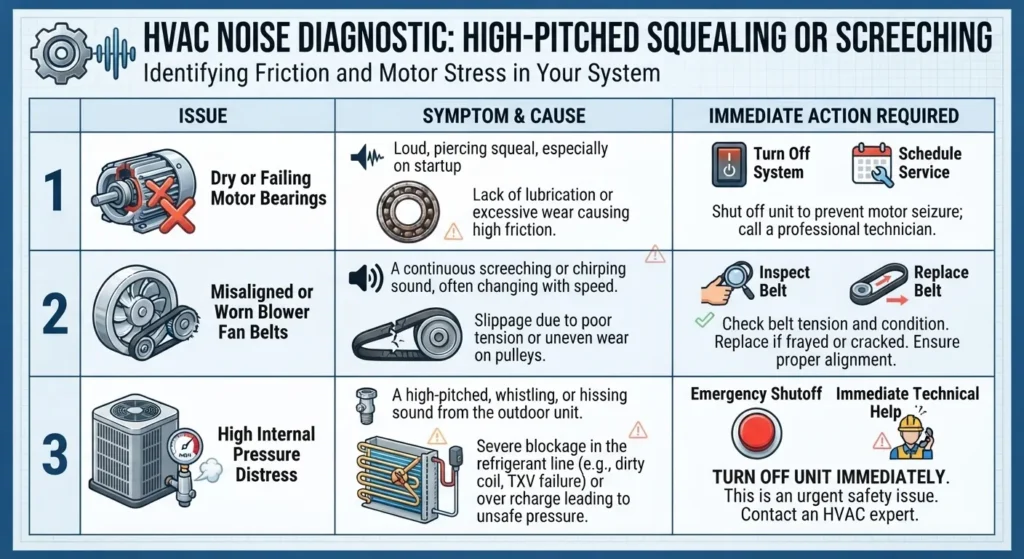
Few household sounds are as unsettling as a continuous, ear-splitting squeal coming from your HVAC system. High-pitched screeching or squealing is almost always a direct symptom of extreme friction, mechanical strain, or failing bearings within your system’s motorized components.
[ Motor Shaft ] ---> ( Worn Bearings / Dried Lubricant ) ---> High-Pitched Screeching / Squealing
Dry or Failing Motor Bearings
Both the outdoor condenser fan motor and the indoor blower motor rely on sealed bearings to ensure smooth, frictionless rotation. Over years of constant operation, the factory lubricant inside these bearings can dry out due to intense heat, moisture exposure, or simple age.
When dry metal bearings grind against one another at high speeds, they produce a piercing screeching noise. This sound is a clear warning sign that the motor is overheating and nearing complete mechanical seizure. If you catch this issue early, an HVAC technician can often lubricate or replace the bearings; if ignored, the entire motor will burn out, leaving your home without climate control.
Misaligned or Worn Blower Fan Belts
While many modern residential heat pumps utilize direct-drive motors, many older units and specialized air handlers still feature belt-driven blower assemblies. Just like a serpentine belt in an automobile, an HVAC belt can stretch, crack, or slip out of alignment over time.
A loose or slipping belt produces a loud, continuous squeal during start-up and continuous operation. If the belt slips entirely, the blower motor will run continuously without actually circulating air through your home, leading to frozen evaporator coils and severe system strain.
High Internal Pressure Distress
In some severe instances, a high-pitched screeching noise that lasts for several seconds right as the unit starts up can indicate dangerous head pressure within the compressor. If refrigerant lines are clogged or expansion valves fail, the compressor is forced to push refrigerant against extreme backpressure. This places extreme strain on internal scroll components, producing a distinct high-pitched screech before the unit’s safety limit switch shuts it down.
3. Loud Hissing or Whistling: High-Pressure Leaks and Airflow Restrictions
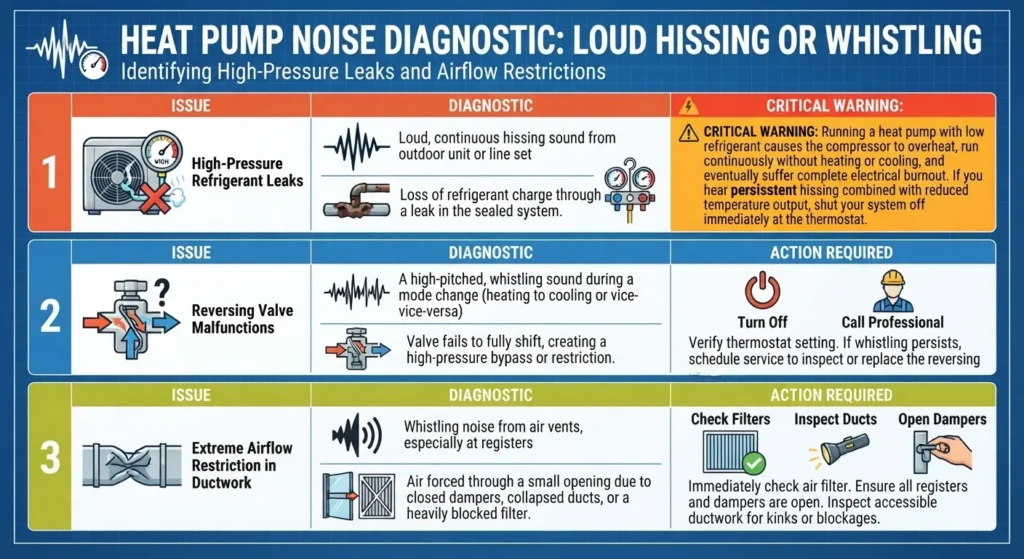
Hissing sounds can range from a soft, temporary murmur to a loud, constant roar akin to a pressure cooker releasing steam. Determining whether the hissing is coming from your outdoor unit’s refrigerant lines or your indoor ductwork is vital to diagnosing the problem accurately.
High-Pressure Refrigerant Leaks
The most serious cause of a loud, prolonged hissing sound from your heat pump is a high-pressure refrigerant leak. Your heat pump relies on a closed loop of pressurized chemical refrigerant to absorb and transfer heat between the indoor and outdoor environments.
If copper line sets, aluminum coil joints, or valve stems develop micro-fractures due to corrosion or mechanical vibration, high-pressure gas escapes through the tiny opening. This produces a distinct, constant hissing sound, often accompanied by a bubbling or gurgling noise as liquid refrigerant mixes with air.
Critical Warning: Running a heat pump with low refrigerant causes the compressor to overheat, run continuously without heating or cooling, and eventually suffer complete electrical burnout. If you hear persistent hissing combined with reduced temperature output, shut your system off immediately at the thermostat.
Reversing Valve Malfunctions
Heat pumps utilize a specialized component called a reversing valve to switch the flow of refrigerant between heating mode in the winter and cooling mode in the summer. The valve uses a sliding internal mechanism driven by a solenoid.
If the reversing valve gets stuck midway between modes or suffers an internal bypass seal failure, pressurized refrigerant bleeds across internal chambers. This internal bleed creates a sharp, continuous hissing or swooshing noise right at the outdoor unit. When this occurs, your system loses its ability to regulate temperature effectively and will often stick in one mode.
Extreme Airflow Restriction in Ductwork
If the hissing or high-pitched whistling noise is heard strictly near your indoor air intake vents or return grilles, the issue may stem from severe static pressure differentials rather than a refrigerant leak.
When air filters become heavily clogged with dust, pet dander, and debris, your blower motor tries to pull air through an almost solid barrier. This vacuum forces air through microscopic gaps around filter frames, duct joints, or cabinet doors, creating a loud whistling or hissing noise. Investing in regular heat pump maintenance ensures filters and coils remain clean, protecting your system from harmful static pressure spikes.
[ Severe Filter Clog ] —> [ Extreme Static Vacuum ] —> High-Velocity Air Pulled Through Gaps —> Whistling / Hissing Noise
4. Normal vs. Abnormal Heat Pump Sounds: What Is Safe?
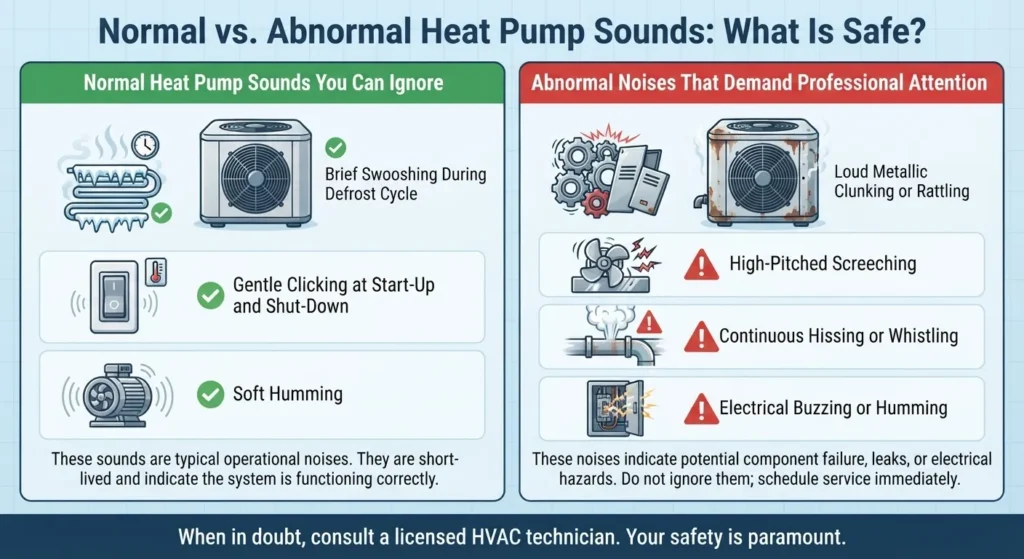
Because heat pumps operate differently than traditional gas furnaces, they naturally produce operational sounds that can startle homeowners who are unfamiliar with their mechanics. Knowing the difference between normal operational noises and true emergency warnings will keep you from panicking unnecessarily while ensuring you act quickly when real trouble arises.
Normal Heat Pump Sounds You Can Ignore
- Brief Swooshing During Defrost Cycle: During cold winter weather, your outdoor unit’s coil will naturally accumulate frost. To clear this, the system temporarily reverses into cooling mode to warm the outdoor coil. When the reversing valve shifts, you will hear a loud swoosh or puff of air followed by a deeper compressor hum. This is completely normal and lasts only a few minutes.
- Gentle Clicking at Start-Up and Shut-Down: Electrical relays and contactors emit a crisp clicking sound when receiving signals from your thermostat to turn heating or cooling cycles on or off.
- Soft Humming: The electric motor windings and compressor naturally emit a quiet, low-frequency hum during routine operation.
Abnormal Noises That Demand Professional Attention
- Loud Metallic Clunking or Rattling: Loose hardware, broken compressor isolators, or impacting fan blades.
- High-Pitched Screeching: Friction in dry motor bearings or worn blower belts.
- Continuous Hissing or Whistling: Refrigerant leaks, stuck reversing valves, or severe filter clogs.
- Electrical Buzzing or Humming: Chattring contactors, failing capacitors, or burnt motor coils.
5. Step-by-Step DIY Troubleshooting for Panicked Homeowners
If your heat pump suddenly starts making terrifying noises, follow this emergency troubleshooting checklist before calling in an HVAC technician:
Step 1: Perform a Safe System Shutdown
If you hear harsh clunking, grinding, or loud hissing, go directly to your thermostat and switch the system to OFF. If the noise is extremely severe or accompanied by a burning smell, go to your main breaker panel or outdoor electrical disconnect box and shut off power to the unit completely. Stopping operation prevents a loose part from destroying adjacent components.
Step 2: Conduct a Visual Visual Inspection of the Outdoor Unit
Once power is safely disconnected, inspect the outdoor unit with a flashlight:
- Look through the top grille to check if sticks, leaves, or ice buildup are contacting the fan blades.
- Check if the outer cabinet panels are loose or missing mounting screws.
- Look for heavy ice accumulation completely enclosing the outdoor coils.
Step 3: Check Your Indoor Return Vents and Air Filter
Walk inside and inspect your HVAC air filter:
- Remove the air filter and hold it up to a light source. If light cannot pass through, replace it immediately.
- Ensure all supply and return vents across your rooms are fully open and unblocked by furniture, rugs, or drapes.
Step 4: Know When to Stop and Call an Expert
Never attempt to open sealed electrical compartments, disassemble compressor housings, or tamper with copper refrigerant lines. High-voltage capacitors retain lethal electrical charges even when power is disconnected, and pressurized refrigerant poses severe chemical freeze and inhalation hazards. If basic visual checks do not reveal a simple external obstruction, it is time to call for professional diagnostic support.
6. Preventative Care: Stopping Strange Heat Pump Noises Before They Start
The most effective way to eliminate distressing heat pump noises is through proactive, scheduled system care. Because heat pumps provide both heating in winter and cooling in summer, they accumulate twice as many operational hours as standard seasonal furnaces or air conditioners.
The Value of Annual Tune-Ups
Scheduling professional maintenance twice per year—once in spring before cooling season and once in autumn before winter—keeps every mechanical and electrical part operating smoothly. During a professional tune-up, certified technicians:
- Lubricate all moving motor bearings and shafts to prevent friction screeching.
- Inspect, align, and balance fan blades and blower wheels.
- Measure refrigerant charges and perform electronic leak detection.
- Tighten all electrical connections and test start capacitors to avoid electrical buzz.
- Clean outdoor coils and check reversing valve solenoids for smooth switching.
Protecting Your System with Comprehensive Coverage
Enrolling in structured maintenance programs, such as our comprehensive Family Memberships, provides homeowners with routine tune-ups, priority emergency scheduling, and discounts on repairs. Regular professional care ensures minor mechanical wear is caught and corrected long before it turns into a loud, alarming noise in the middle of the night.
Protect Your Home Comfort with Family Heating, Cooling, Electric & Plumbing

Strange heat pump noises are your system’s way of asking for immediate help. Whether you are dealing with a loose fan blade clunking in the yard, a motor bearing screeching in the air handler, or a high-pressure refrigerant hiss, ignoring the warning signs only leads to more severe damage and higher repair bills down the road.
If your heat pump is making alarming sounds or struggling to keep your home comfortable, do not wait for a complete system breakdown. The licensed HVAC experts at Family Heating, Cooling, Electric & Plumbing are ready to diagnose and repair your system quickly and safely. From emergency fixes to new, high-efficiency heat pump installation & replacement, our team delivers reliable, long-lasting comfort solutions for your home.
Understandably, every system eventually reaches the end of its useful lifespan. If your system is over 12 to 15 years old and experiencing recurring mechanical failures, exploring what is the most common problem with heat pumps can help you decide whether a targeted repair or a modern replacement is the smartest financial move.
Need immediate help with a noisy heat pump? Contact the trusted professionals at Family Heating, Cooling, Electric & Plumbing today to schedule your expert diagnostic evaluation and restore quiet, efficient comfort to your home!