
As summer temperatures climb, your home’s air conditioner becomes your primary line of defense against scorching heat and muggy air. However, like all mechanical appliances, cooling systems do not last forever. If your system is starting to struggle, you are probably wondering how long does central ac last and whether it makes financial sense to repair your current unit or invest in a brand-new replacement.
Understanding the average lifespan of an air conditioner, identifying early warning signs of equipment failure, and learning how to calculate repair-versus-replace costs will help you make an informed decision for your home and budget.
What Is the Average Lifespan of a Central AC Unit?
On average, a well-maintained central air conditioner lasts between 12 and 15 years. Under ideal conditions—with regular professional servicing and mild climate usage—some high-quality units can even operate effectively for up to 20 years.
However, average lifespan metrics vary significantly depending on several critical factors:
- Frequency of Use: Systems operating in hotter regions run longer cooling cycles, experiencing far more operational wear and tear over a shorter span of time.
- Routine Maintenance: Units that undergo regular spring inspections, coil cleanings, and filter changes last years longer than neglected systems.
- Quality of Installation: A properly sized and correctly installed AC operates smoothly, whereas an oversized or undersized unit experiences frequent cycling that degrades internal components prematurely.
- Coastal Exposure: Salt-laden coastal air accelerates rust and coil corrosion, reducing overall equipment longevity.
Understanding how long does central ac last helps homeowners anticipate when system reliability will naturally begin to taper off.
Key Factors That Impact How Long Central AC Lasts
While manufacturer ratings provide a baseline benchmark, the actual operational life of your equipment depends on daily usage and maintenance habits.
1. Preventive Maintenance and Servicing
Skipping annual service visits is one of the quickest ways to shorten your air conditioner’s life. Over time, dirt accumulates on internal components, reducing system efficiency and overworking critical mechanical parts like the compressor motor. Scheduling routine AC tune-ups keeps electrical connections tight, moving parts lubricated, and coils clean, preventing sudden breakdowns during peak summer months.
2. Air Filter Cleanliness
A clogged or dirty air filter restricts airflow, forcing your blower fan to work significantly harder to move air throughout your home. Restricted airflow causes internal temperatures to plummet, which can freeze the evaporator coils and damage the compressor. Replacing your air filters every 1 to 3 months is one of the simplest DIY steps to ensure your system reaches its maximum expected lifespan.
3. Sizing and Initial Installation
If your air conditioning unit was improperly sized during installation, its lifespan will suffer. An oversized AC cools space too quickly without properly dehumidifying, causing constant short-cycling (turning on and off rapidly). An undersized unit runs continuously without reaching the target setpoint on your thermostat. Both scenarios place extreme stress on internal components, accelerating wear.
7 Clear Signs It’s Time to Replace Your Central AC
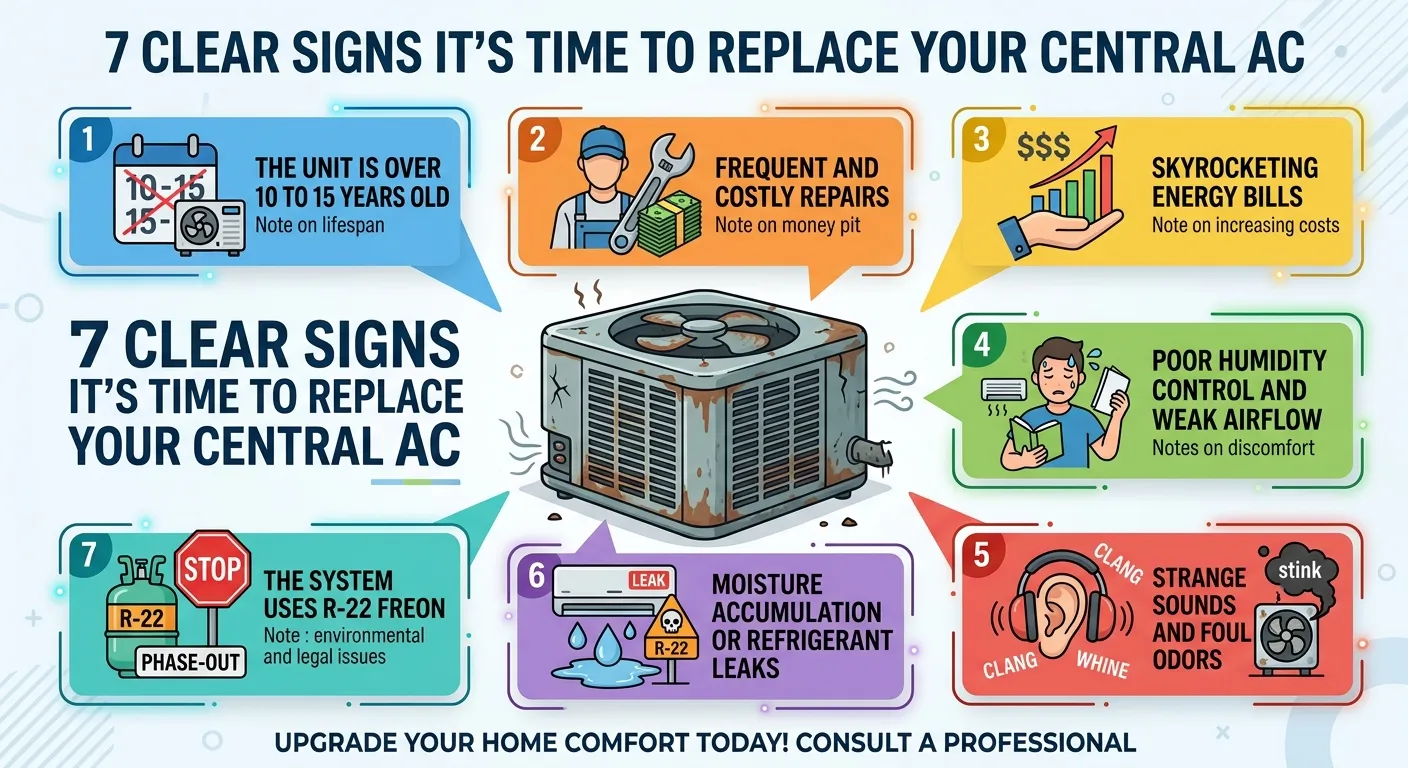
Even with flawless maintenance, all cooling systems eventually reach the end of their service life. Knowing the early indicators of system failure allows you to plan an upgrade proactively rather than facing an emergency breakdown during a heatwave.
| SIGNS YOUR AC IS NEARING END-OF-LIFE |
| [1] Unit age exceeds 10–15 years [2] Frequent, costly service repairs [3] Unexplained spikes in monthly energy bills [4] Inconsistent temperatures & poor humidity control [5] Excessive noise (grinding, squealing, banging) [6] Unit still relies on phased-out R-22 Freon refrigerant [7] Repair costs exceed 50% of a new installation value |
1. The Unit Is Over 10 to 15 Years Old
If your system is creeping past the 10-year mark, you should start evaluating how long your central AC will last under continued operation. Older systems utilize outdated technology that consumes far more electricity than modern high-efficiency models.
2. Frequent and Costly Repairs
Are you calling an HVAC technician every summer to fix another broken component? Minor fixes like replacing a capacitor are normal, but repeated issues with fan motors, electrical boards, or refrigerant leaks quickly add up. If repair bills are becoming an annual expense, those funds are better invested toward a replacement unit.
3. Skyrocketing Energy Bills
As central AC units age, their mechanical efficiency declines. Motors lose performance, coils become corroded, and internal parts friction increases. If your cooling usage has remained constant but your monthly utility costs are climbing, your system is working harder and taking longer to cool your home.
4. Poor Humidity Control and Weak Airflow
A primary function of central air conditioning is removing excess moisture from indoor air. If your home feels uncomfortably humid, muggy, or dusty even while the AC runs, the equipment is losing its operational capacity. Weak airflow from vents can also point to a failing blower motor or severe ductwork leaks.
5. Strange Sounds and Foul Odors
Squealing, grinding, or loud banging sounds indicate serious mechanical failures, such as worn motor bearings or loose belts. Musty smells often signal mold growth inside the ductwork or drip pan, while burning odors indicate dangerous electrical overheating.
6. Moisture Accumulation or Refrigerant Leaks
Water pooling around your indoor unit is a clear sign of a clogged condensate drain line or frozen evaporator coils. More seriously, if your system is leaking refrigerant, it will struggle to generate cool air. Refrigerant repairs can be extremely expensive depending on the type of coolant your system uses.
7. The System Uses R-22 Freon
If your unit was manufactured before 2010, it likely uses R-22 Freon refrigerant. Production and importation of R-22 have been phased out due to environmental regulations. Recharging an R-22 unit is now cost-prohibitive, making complete system replacement the most practical long-term choice when a leak occurs.
The Repair vs. Replace Decision: Formulas and Rules of Thumb
Deciding whether to patch up an older system or purchase a new unit can feel overwhelming. Fortunately, HVAC professionals rely on two straightforward mathematical guidelines to help homeowners evaluate their choices objectively.
The $5,000 Rule
The $5,000 rule is an industry standard used during cooling assessments.
Formula: Multiply the age of your AC unit (in years) by the estimated repair cost (in dollars).
- If the total is less than $5,000, repairing the unit is usually a safe choice.
- If the total exceeds $5,000, replacing the unit is the smarter financial investment.
Example: If your central AC is 12 years old and needs a $500 fan motor repair:
$$\text{12 years} \times \$500 = \$6,000$$
Since $6,000 exceeds $5,000, replacing the system offers better long-term value than putting money into an aging unit.
The 50% Cost Rule
If a single repair quote equals 50% or more of the cost of a new air conditioning unit, replacement is almost always recommended. Investing heavily into an older, out-of-warranty system leaves you vulnerable to another major failure shortly down the road.
Comparing Options: Repair vs. Replace
| Feature / Factor | Repair Existing AC | Replace With New AC |
| Upfront Cost | Lower initial cash outlay | Higher upfront investment |
| Monthly Energy Bills | Higher; efficiency drops as unit ages | Lower; high SEER ratings save up to 30%+ |
| Equipment Warranty | Coverage limited to the new repair part | Full 10-year manufacturer equipment warranty |
| System Reliability | Risk of secondary component failures | Dependable operation with minimal breakdown risk |
| Refrigerant Type | May use expensive, phased-out R-22 | Uses modern, environmentally friendly R-410A / R-32 |
Benefits of Upgrading to a Modern Central AC System
While installing a new cooling unit requires an initial financial commitment, modern air conditioners offer significant performance advantages over older models.
| [1] Lower Monthly Utility Bills (High SEER Ratings) [2] Clear 2–3 feet of space around the outdoor unit [3] Keep supply vents unblocked across all rooms [4] Flush the condensate drain line regularly [5] Schedule spring tune-ups before summer heat peaks |
1. Clean Around the Outdoor Condenser Unit
Your outdoor condenser unit needs room to pull in outside air and dissipate heat efficiently. Keep grass, weeds, leaves, and overhanging bushes trimmed back at least 2 to 3 feet away from all sides of the cabinet. Periodically spray down the exterior fins with a garden hose to clear away buildup.
2. Maintain Consistent Air Filter Changes
Never let a filter become choked with dirt and pet dander. Inspect your filter monthly during high-use summer months and replace it immediately whenever it appears dirty.
3. Keep Air Vents Open and Unobstructed
Closing supply registers in unused rooms might seem like a good way to save energy, but it actually creates dangerous pressure imbalances inside your ductwork. Keep all interior vents open and ensure furniture, rugs, or drapes do not block airflow.
4. Schedule Annual Maintenance Tune-Ups
The best way to maximize how long central ac lasts is by enrolling in a routine maintenance program. A certified HVAC technician can identify failing capacitors, clear drain lines, test safety controls, and clean internal coils before minor issues escalate into costly breakdowns.
When Sudden Failure Happens: Troubleshoot Before You Call
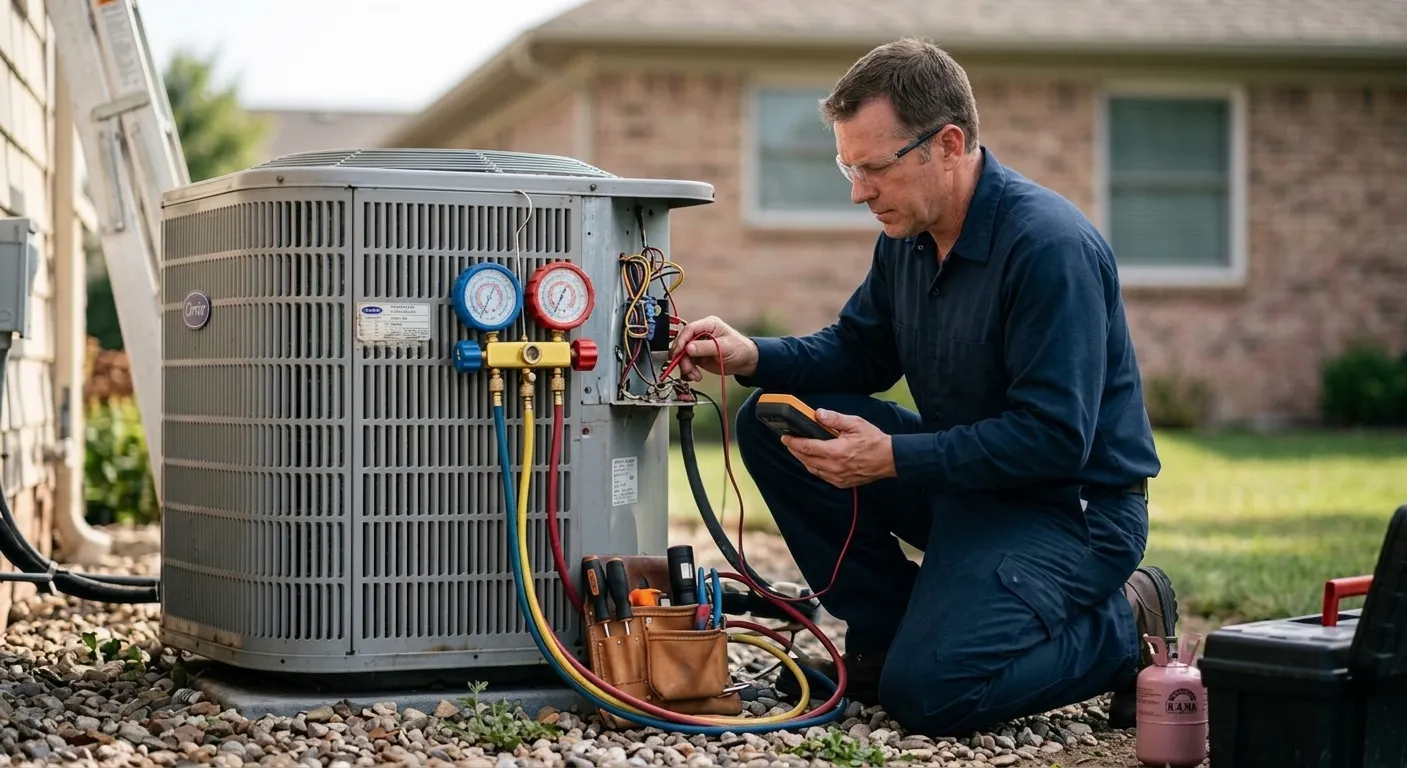
If your cooling system stops working unexpectedly, run through these basic checks before calling for emergency repair:
1.Check Thermostat Settings:Verify mode and setpoint.
Ensure your thermostat is set to COOL and the target temperature is programmed lower than the current room reading. If the display screen is blank, replace the internal batteries.
2.Inspect Circuit Breakers:Check for tripped switches.
Check your main electrical panel. If the circuit breaker for your AC or air handler has tripped to the middle or “OFF” position, switch it firmly OFF and back ON once.
3.Inspect the Air Filter:Check for restricted airflow.
A severely clogged filter can trigger internal safety switches that shut down the unit automatically. If the filter is dark or dusty, replace it.
4.Check the Outdoor Disconnect:Ensure power supply is engaged.
Verify that the outdoor shutoff switch near your condenser cabinet has not been accidentally bumped or switched off.
If your system still refuses to turn on or blows warm air after completing these steps, turn the thermostat off and schedule professional assistance right away.
Frequently Asked Questions
Can you replace just the outdoor AC condenser unit?
While it is technically possible to replace only the outdoor condenser unit, it is rarely recommended. An outdoor unit paired with an old indoor evaporator coil creates a mismatched system. This mismatch reduces cooling efficiency, risks premature compressor failure, and often voids manufacturer warranties.
What is the average cost of a new central AC unit?
Central air conditioning installation costs typically range between $3,300 and $7,800+, depending on home size, SEER efficiency ratings, and ductwork requirements. If you are considering alternative heating and cooling options, a modern heat pump repair or replacement system offers dual-climate flexibility.
Should I repair or replace my AC unit if it’s over 10 years old?
If the unit requires a minor fix, a repair makes sense. However, if the repair involves a major component (like a compressor or motor) and costs hundreds of dollars, replacing the equipment is usually the smarter long-term investment. You can also review why an AC stops working suddenly to see if your current issue is a simple fix.
Make the Right Choice for Your Home’s Cooling Comfort
Understanding how long does central ac last allows you to plan ahead and make confident HVAC decisions. If your current air conditioner is over 12 years old, requires frequent service calls, or causes high utility bills, investing in a replacement system will restore peace of mind and lower long-term home operating expenses.
Whether you need emergency AC repair, routine maintenance tune-ups, or a free consultation on a new high-efficiency system, the experienced team at Family Heating, Cooling, Electric & Plumbing is ready to help. Explore our complete range of air conditioning services or contact us today to schedule your home cooling evaluation!