


If you find yourself constantly wiping down surfaces only to see a fine layer of gray grime settle back down hours later, you are likely asking yourself: why is my house so dusty? It is one of the most frustrating problems a homeowner can face. You sweep, vacuum, wipe tables, and regularly swap out your HVAC air filters, yet the dust remains persistent. For health-conscious homeowners, families with young children, and anyone suffering from seasonal or year-round allergies, persistent dust is not just an aesthetic annoyance—it directly impacts your quality of life, respiratory health, and overall indoor comfort.
Why Dust Persists After Cleaning and Filter Changes
If your home remains excessively dusty despite routine cleaning and fresh air filters, the primary culprit is usually a breakdown in your home’s air envelope or ventilation system. While standard high-efficiency air filters trap airborne particles passing directly through the air handler, they cannot prevent dust from entering your living space through other pathways.
The most frequent causes of chronic dust accumulation include:
- Unsealed or Leaky Air Ducts: Leaks in your return or supply ductwork pull unconditioned, dusty air from attics, crawlspaces, or basement walls and blow it directly into your rooms, bypassing your filter entirely.
- Incorrect Filter MERV Rating or Gaps Around the Filter Rack: Filters with inadequate MERV ratings let fine particles pass, while ill-fitting filters allow unfiltered air to bypass the media.
- Imbalanced Indoor Humidity Levels: Dry air (below 30% relative humidity) prevents particles from settling or bonding, allowing dust to float indefinitely across room surfaces.
- Negative Air Pressure: When your home pulls outside air through unsealed window frames, door sweeps, and wall outlets, it introduces fine soil, pollen, and environmental particulate matter.
- High-Emission Indoor Sources: Heavy carpet fibers, pet dander, shedding textiles, and unvented appliances continuously manufacture new dust faster than standard filtration can pull it out.
Understanding the Hidden Drivers of Constant Dust in House
Dealing with a constant dust in house situation requires looking beyond the surface level. Dust is a complex mixture of microscopic materials: fine soil particles brought in from outdoors, skin cells, pet hair and dander, clothing fibers, mold spores, microscopic insect debris (such as dust mite droppings), and soot.
When you notice dust accumulating immediately after cleaning, it means your living environment is producing or importing particles faster than your HVAC system can capture them.
The Role of Air Pressure and Infiltration
Your home acts as a balanced pneumatic system. When exhaust fans (in bathrooms or kitchens) run, or when duct leaks spill conditioned air into unconditioned spaces, negative pressure develops inside your home. This suction pulls outdoor dust, pollen, and neighborhood air pollution through microscopic cracks around foundations, siding, and window sills.
Evaluating Indoor Air Pollution Sources
To eliminate excessive dust, it helps to identify and mitigate the major indoor air pollution sources in your living space. Household dust is frequently a vehicle for airborne chemicals and allergens.
- Textiles and Upholstery: Carpets, rugs, heavy drapes, and plush furniture shed micro-fibers continuously when walked on or sat upon. Wall-to-wall carpeting acts as a massive dust reservoir, holding particles until foot traffic kicks them back into the air stream.
- Biological Shedding (Pets and Occupants): Skin cells are the primary organic component of household dust. Pets shed dander and microscopic hair fragments year-round.
- Building Materials and Renovations: Older drywall, unsealed concrete in basements, and insulation fibers can slowly breakdown and enter living spaces.
- Unvented Combustion: Fireplaces, gas stoves, and burning candles introduce ultrafine soot particles that combine with household dust, leaving a sticky, dark residue on surfaces and air vents.
Addressing these sources at their origin—by washing bedding frequently in hot water, vacuuming with HEPA-rated equipment, and scheduling regular professional HVAC maintenance—dramatically lowers the baseline dust load.
| CHECKLIST: DIRTY DUCTWORK SYMPTOMS |
| [ ] Visible dust puffs blowing from vents when the system turns on [ ] Dark streaks or smudges around register grills and ceiling vents [ ] Unexplained spikes in household dust despite weekly cleaning [ ] Musty, stale, or dusty odors coming from supply vents [ ] Inconsistent airflow between different rooms [ ] Frequent, unresolved allergy symptoms or respiratory irritation |
Recognizing Key Dirty Ductwork Symptoms
Keep an eye out for these critical dirty ductwork symptoms:
- Visible Dust Popping From Vents: When your blower fan turns on, do you notice a faint puff of dust blowing out of registers? This indicates significant debris accumulation inside the branch ducts.
- Dark Dust Rings Around Registers: Dark smudges or black dust marks on the ceiling or wall around your air vents mean dirt is leaking out around the register box or escaping the duct stream.
- Musty or Stale Odors When HVAC Runs: Accumulated organic dust inside warm, humid ductwork creates a breeding ground for mold and bacteria, causing persistent odors when your system circulates air.
- Uneven Airflow Across Rooms: Heavy dust, debris buildup, or collapsed duct sections restrict airflow, forcing your system to work harder while distributing air unevenly.
If your system displays these symptoms, standard filter swaps will not resolve the issue. Professional duct cleaning and air purification services are necessary to scour supply and return trunks, seal duct joints, and integrate whole-home air purifiers capable of capturing microscopic particulates before they reach your living room.
Safety Guidelines & DIY Limitations
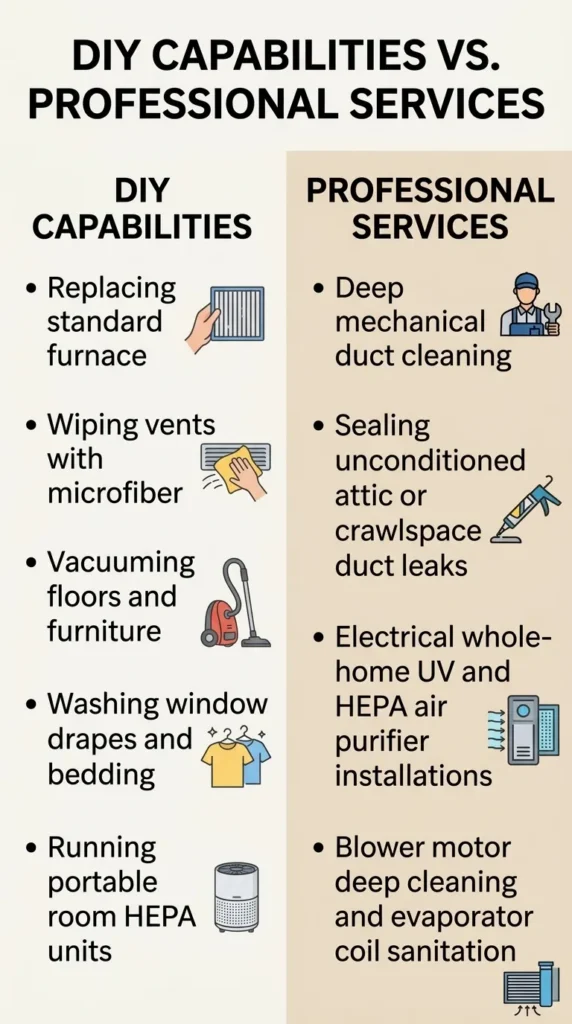
While homeowners can manage surface cleaning, filter replacements, and minor door sealing, certain air quality and HVAC interventions require certified professionals to ensure safety and system longevity.
DIY CAPABILITIES VS. PROFESSIONAL SERVICES
| DIY TASKS (SAFE FOR HOMEOWNERS) | PROFESSIONAL REQUIRED (HVAC PROS) |
| Replacing standard furnace Wiping vents with microfiber Vacuuming floors & furniture Washing window drapes & bedding Running portable room HEPA units | Deep mechanical duct cleaning Sealing unconditioned attic or crawlspace duct leaks Electrical whole-home UV / HEPA air purifier installations Blower motor deep cleaning and evaporator coil sanitation |
Safety Risks of Improper DIY Actions
- HVAC Airflow Restriction: Installing excessively thick filters (e.g., high-resistance hospital-grade filters) on standard residential systems can starve your HVAC system of air, leading to frozen evaporator coils, cracked heat exchangers, or premature compressor failure.
- Duct Work Damage: Inserting flexible household vacuum hoses or improper brushes into flexible ductwork can tear the inner liner, creating massive air leaks and pulling fiberglass insulation directly into your breathing air.
- Combustion Backdrafting: Improperly altering home ventilation or fan pressures can cause water heaters, gas furnaces, or fireplaces to vent dangerous fumes, such as carbon monoxide, back into the home.
For deep duct sanitation, system pressure balancing, and whole-home air purification upgrades, trust licensed technicians who utilize specialized equipment, negative-pressure vacuum trucks, and EPA-approved antimicrobial foggers.
Local Climate Considerations & Regional Relevance
Depending on where you live, environmental factors significantly influence how dust enters your home. For homeowners relying on heating and cooling systems throughout varying seasonal extremes, climate plays a major role in dust accumulation:
- High Humidity & Seasonal Pollen: Humid summers trigger dust mite explosions and mold growth inside unconditioned basements and crawlspaces. High pollen counts during spring and autumn infiltrate homes via unsealed duct connections and open windows.
- Winter Heating & Dry Air: Cold winters force furnaces to run continuously. Dry, heated air dries out household surfaces, creating static electricity that keeps fine dust particles floating throughout living spaces.
- Agricultural & Environmental Dust: Homes near farming zones, ongoing residential construction, or major roadways face high levels of airborne topsoil, road dust, and fine soot that demand high-efficiency filtration solutions.
Keeping your HVAC system tuned up ensures that regardless of outdoor weather shifts, your indoor air remains clean, comfortable, and filtered.
Complete Home Comfort Solutions Beyond Air Quality
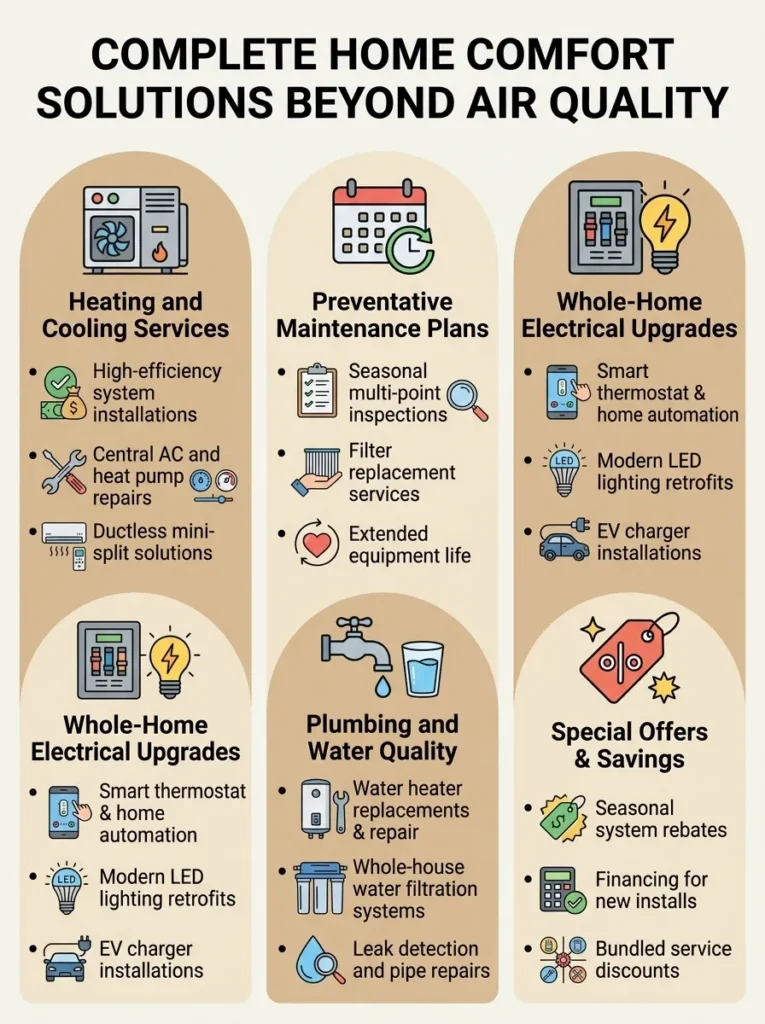
Managing indoor air quality is just one piece of keeping your home safe, efficient, and comfortable year-round. An energy-efficient home requires well-maintained heating, air conditioning, electrical systems, and plumbing infrastructure working in harmony.
To learn more about keeping your residential systems in peak condition, explore these resources:
- Heating and Cooling Services: Keep your furnace and air conditioner operating efficiently while protecting your air quality with professional heating and cooling maintenance.
- Preventative Maintenance Plans: Protect your home’s mechanical equipment, prevent emergency breakdowns, and ensure frequent filter inspections by joining an annual maintenance plan.
- Whole-Home Electrical Upgrades: Ensure your HVAC equipment, whole-home air purifiers, and humidifiers have safe, reliable power with expert electrical services.
- Plumbing and Water Quality: Address indoor humidity sources, sump pump drainage, and plumbing leaks that contribute to mold growth with comprehensive plumbing services.
- Special Offers & Savings: Take advantage of discounts, coupons, and seasonal service deals on air quality tune-ups by checking current coupons.
Frequently Asked Questions (FAQs)
Why is my house so dusty even though I change my air filter regularly?
Changing your air filter is essential, but it only filters air that actually passes through your furnace or air handler. If your home has leaky ductwork in the attic or crawlspace, dry indoor air, drafty windows, or high internal dust sources (like wall-to-wall carpeting and shedding pets), dust will continue to accumulate on your furniture before your HVAC system can pull it through the filter.
Can dirty ducts cause health problems or trigger allergies?
Yes. Dirty air ducts accumulate mold spores, pollen, dust mite fragments, pet dander, and fine particulate matter. When your heating or cooling system turns on, these allergens are blown into your bedrooms and living spaces, potentially triggering allergic rhinitis, coughing, sneezing, sore throats, asthma attacks, and eye irritation.
What MERV rating should I use for my home air filter?
For most residential HVAC systems, a filter with a MERV 8 to MERV 11 rating offers the ideal balance of high-efficiency particle capture (trapping dust, pollen, and pet dander) without restricting airflow or placing excessive strain on your system motor. Consult your owner's manual or an HVAC technician before using MERV 13 or higher.
How often should residential air ducts be cleaned?
The National Air Duct Cleaners Association (NADCA) recommends having your air ducts inspected every 2 to 3 years and professionally cleaned every 3 to 5 years. However, homes with indoor pets, recent home renovations, occupants with severe allergies, or visible mold growth may require more frequent cleanings.
Will a whole-house air purifier eliminate dust completely?
While no system can eliminate 100% of dust (since humans and pets shed particles continuously), an integrated whole-house air purifier combined with proper duct sealing can reduce floating airborne dust by up to 80% to 95%. Whole-home systems work in tandem with your central HVAC blower to filter air continuously across every room in your home.
Take Control of Your Indoor Air Quality Today

You do not have to live with constant dust, stubborn allergy symptoms, or stale indoor air. If cleaning and replacing air filters has not solved your household dust problem, let the experienced technicians at Family Heating, Cooling, Electric & Plumbing inspect your ductwork, evaluate your home air quality, and recommend custom filtration solutions tailored to your home.
Contact our team today to schedule an indoor air quality audit or professional system inspection, and start enjoying a cleaner, healthier, and dust-free home!